
The “Breath” of Modern Buildings
We spend nearly 90% of our lives indoors – in homes, offices, schools, and stores. Yet, we rarely consider the quality of the air we breathe inside them. Often, Indoor Air Quality (IAQ) can be up to five times more polluted than the outdoor environment, due to the accumulation of pollutants, carbon dioxide, moisture, and Volatile Organic Compounds (VOCs).
In modern construction and architecture, the challenge is no longer just building energy-efficient and “sealed” buildings, but buildings that “breathe.” Natural ventilation is not simply a traditional practice, but a high-tech, sustainable design strategy that redefines our quality of life.
Why Indoor Air Quality (IAQ) is a Health Issue
Before examining construction solutions, it is essential to understand the problem. Modern building materials, furniture, cleaning products, and even our daily activities (cooking, showering, breathing) continuously release elements that burden the atmosphere of a room.
Poor air quality is directly linked to:
- Sick Building Syndrome: Headaches, dizziness, fatigue, and eye or throat irritation that subside when people leave the building.
- Respiratory problems and allergies: The accumulation of moisture leads to the growth of mold and dust mites.
- Decreased productivity: Studies show that high levels of carbon dioxide in workspaces reduce employees’ cognitive function and concentration.
The Philosophy of Natural Ventilation in Modern Construction
Natural ventilation is the process of renewing indoor air with outdoor air, using exclusively natural forces, such as wind and thermal buoyancy (temperature difference), without the use of mechanical systems (air conditioners, fans).
As a construction company, we do not view natural ventilation as simply “opening the windows.” It is a holistic study integrated into the architectural design stage (bioclimatic design), taking into account the plot’s orientation, the area’s microclimate, and the building’s geometry.
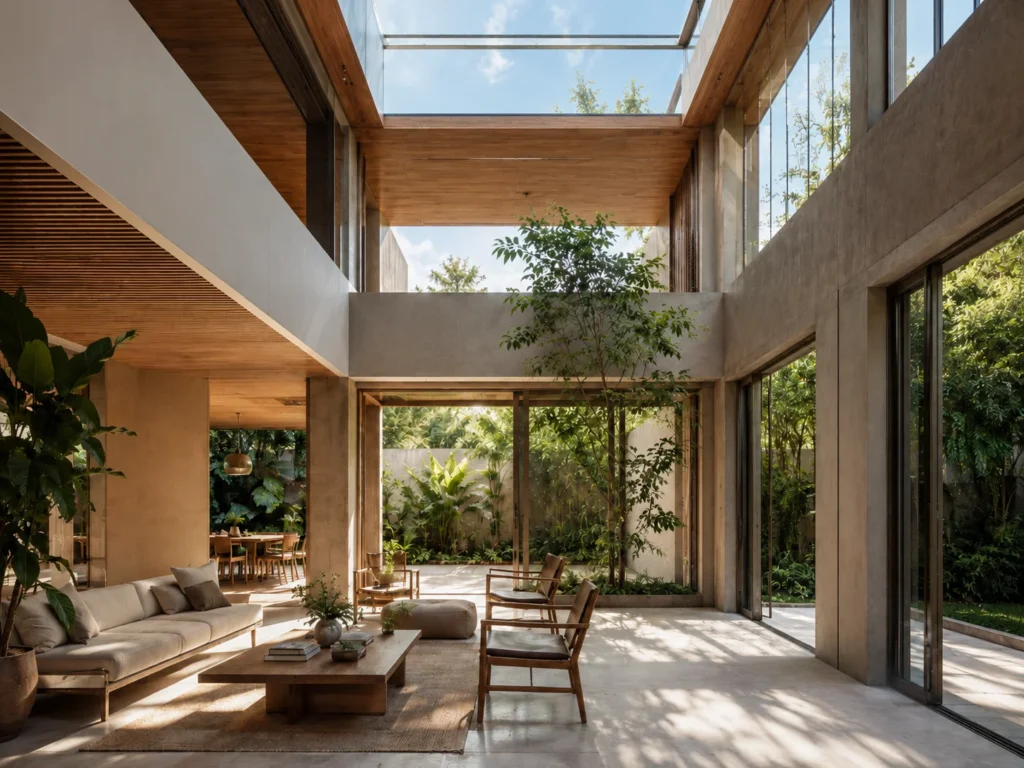
The 3 Basic Natural Ventilation Strategies
To achieve optimal air circulation, three main techniques are used during design:
- Single-Sided Ventilation: Relies on openings (windows or balcony doors) located on only one side of the space. It is the least effective method for deep spaces, but it is useful in small apartments or offices where access to other facades of the building is limited.
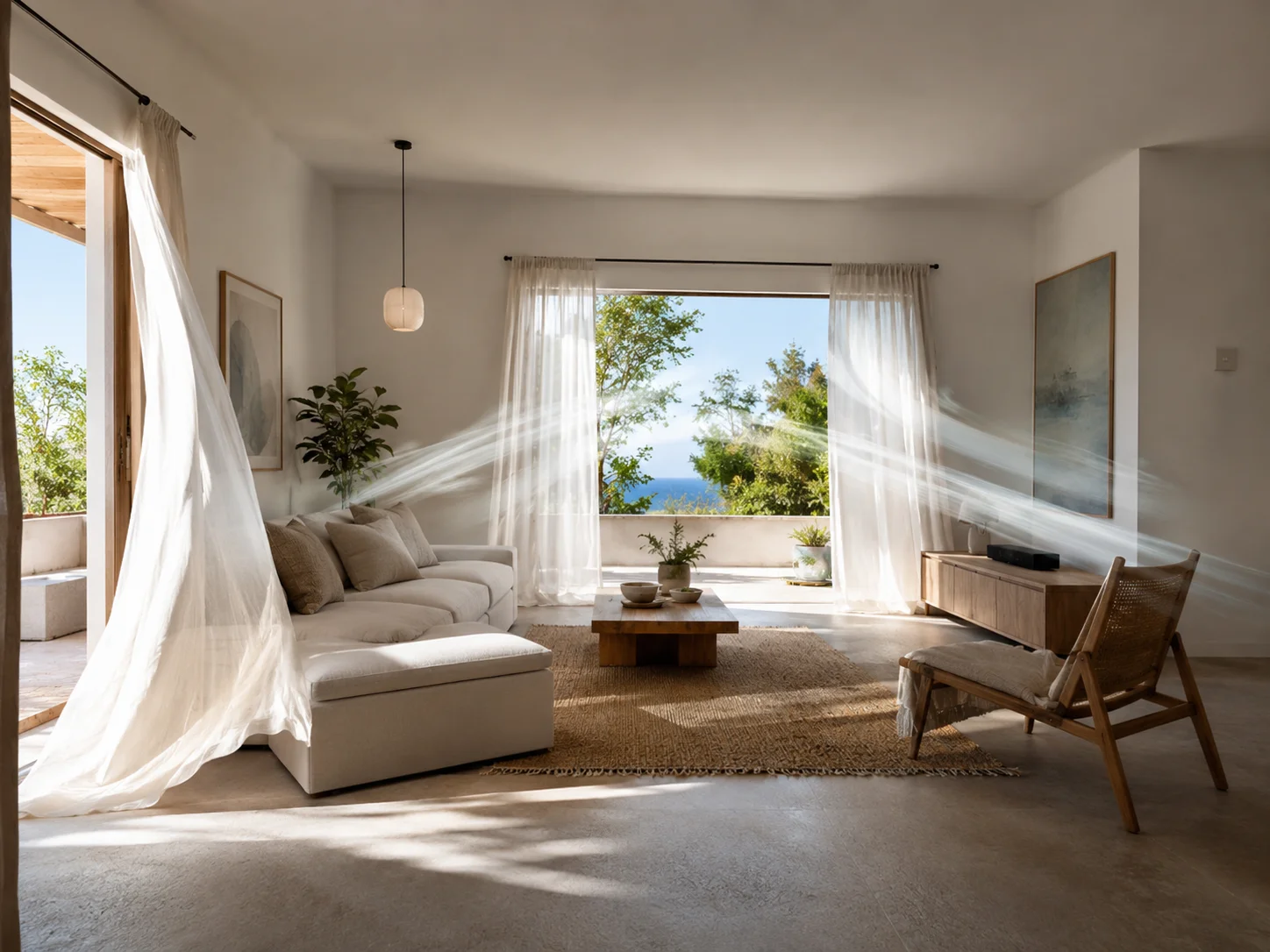
- Cross Ventilation: This is the most popular and effective method. It is based on creating openings on opposite or adjacent sides of a space. The pressure difference created by the wind forces fresh air to enter from one side (high-pressure zone) and carry the warm, polluted air out through the other (low-pressure zone).
- Stack Ventilation (or “Chimney Effect”): A highly clever strategy based on the laws of physics. Warm air is lighter and rises. By placing openings low in the building (cold air intake) and high on the roof or in a central ventilation tower (warm air exhaust), a natural flow is created that continuously renews the air, even on days with no wind at all.
The Benefits of Natural Ventilation for the Building and the Occupant
Integrating these systems into a residence or commercial building offers multiple advantages:
- Drastic Reduction in Energy Costs: Natural ventilation, especially during the night (night cooling), can lower the temperature of the building’s structural elements in summer, reducing air conditioning use by up to 30-40%.
- Improved Thermal Comfort: The gentle movement of air creates a cooling sensation on the skin, making high temperatures more bearable.
- Protection of Structural Elements: The proper removal of moisture prevents condensation on walls, protecting the building’s framework, plaster, and insulation from corrosion and mold.
- Zero Carbon Footprint: It consumes no electrical energy, directly contributing to the reduction of the building’s CO2 emissions.
How Technology Meets Tradition: Smart Natural Ventilation Systems
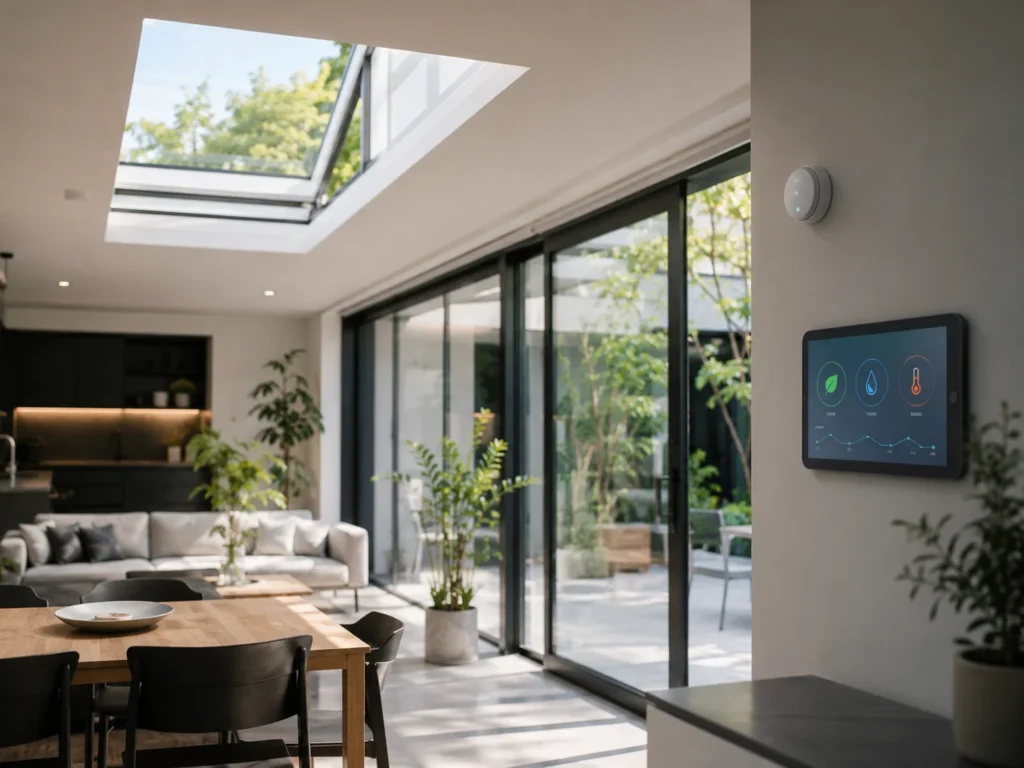
In modern construction, natural ventilation is not left to chance or human memory. It is combined with Smart Home technology and Building Management Systems (BMS).
- Automated Windows and Skylights: Indoor sensors measure CO2 levels, humidity, and temperature. Once pre-set limits are exceeded, the system automatically opens the windows at the ideal angle.
- Building Weather Stations: These sensors monitor outdoor temperature, rain, and wind speed. If it starts raining or the wind becomes excessively strong, the windows close automatically to protect the interior.
- Hybrid Ventilation: When outdoor conditions do not allow for natural ventilation (e.g., extreme cold or a heatwave), the building automatically switches to mechanical ventilation with heat recovery, ensuring maximum economy and comfort.
The Construction Company’s Role: Designing the Future
For natural ventilation to work effectively, high technical expertise is required from the construction team. Simply installing many windows is not enough. Conversely, the reckless placement of openings can cause heat loss or uncomfortable drafts.
In our company, we approach every project with custom studies:
- Micro-climate analysis: We study the prevailing winds in the area by season.
- Computational Fluid Dynamics (CFD): We use advanced software to simulate airflow within the building before excavation even begins.
- Proper selection of window frames: We select aluminum or wooden systems with micro-ventilation and tilt-and-turn capabilities, allowing for a safe airflow even when the occupants are away.
Conclusion: Investing in a Building That Cares for You
The quality of the air we breathe is inextricably linked to our quality of life. The shift towards natural ventilation is not just a modern trend, but a return to the fundamental principles of architecture, enhanced with 21st-century tools.
When you choose to build or renovate a space, do not focus solely on the aesthetics of the materials. Ask about the ventilation, moisture management, and bioclimatic behavior of the building. A truly luxurious and modern building is one that protects the environment and, above all, the health of the people it houses.