
How Design and Construction Affect Our Mood
“We shape our buildings and afterwards our buildings shape us.” – Winston Churchill
Have you ever wondered why you feel unexplained tension upon entering a certain room, while in another you immediately feel peace and relaxation? The answer does not lie in anything metaphysical, but in a very real and measurable science: the psychology of space (or environmental psychology).
For us, as a construction company, a building is not just a combination of concrete, bricks, and steel. It is a living shell that hosts your daily life, your dreams, and above all, your emotions. The way a space is designed and built—from the orientation of the windows to the texture of the walls—can increase productivity, reduce anxiety, or, conversely, cause stress and fatigue.
Let us look in detail at the foundational pillars of design that transform a simple space into a sanctuary of well-being.
1. Natural Light: The Regulator of Our Biology
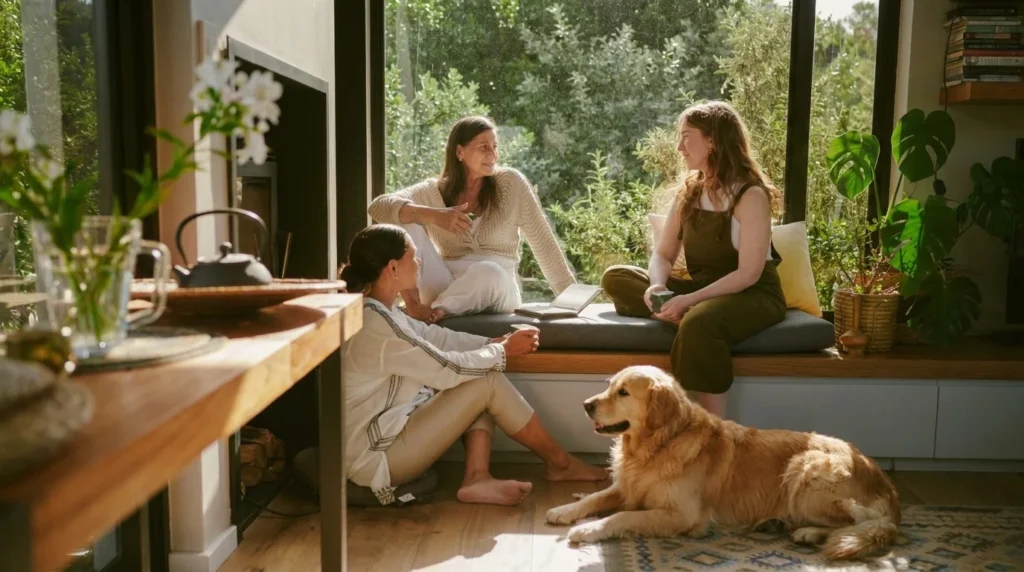
Humanity’s relationship with natural light is deeply rooted in our DNA. Lighting is not just a practical matter of being able to see indoors, but the main regulator of our circadian rhythm (our biological clock).
- The science behind light: Exposure to natural light increases the production of serotonin, the joy hormone, while helping to regulate melatonin, ensuring better sleep at night.
- Construction application: When designing a residence or renovating a commercial space, the strategic placement of large openings (windows, patio doors) is critical. The proper orientation of the building, the use of skylights, and the installation of energy-efficient glass that allows light to enter without trapping heat, are fundamental construction choices that vertically upgrade the psychology of the occupants.
2. Layout and Flow: Freedom or Confinement?
The way we move through a space largely determines the sense of freedom we feel. A space with poor layout and obstacles creates subconscious irritation (known as “spatial stress”).
- Open vs. Private Spaces: In recent years, open-plan design has dominated, as it promotes sociability and makes the space look larger. However, modern spatial psychology points to the need for balance. A complete absence of walls can cause stress due to a lack of privacy or excessive noise.
- Solutions: As builders, we emphasize the creation of zones. We smartly use dividers (e.g., sliding doors, half-walls, or floor level changes) to subtly separate the living room from the workspace or the kitchen, keeping the flow uninterrupted while offering the necessary visual and acoustic isolation when needed.
3. Biophilic Design: The Return to Nature
Modern humans spend over 80% of their time indoors. This alienation from nature has been proven to increase cortisol levels (the stress hormone). This is where Biophilic Design comes in to provide a solution.
This architectural approach aims to smoothly integrate elements of nature into the built environment. In practice, this means:
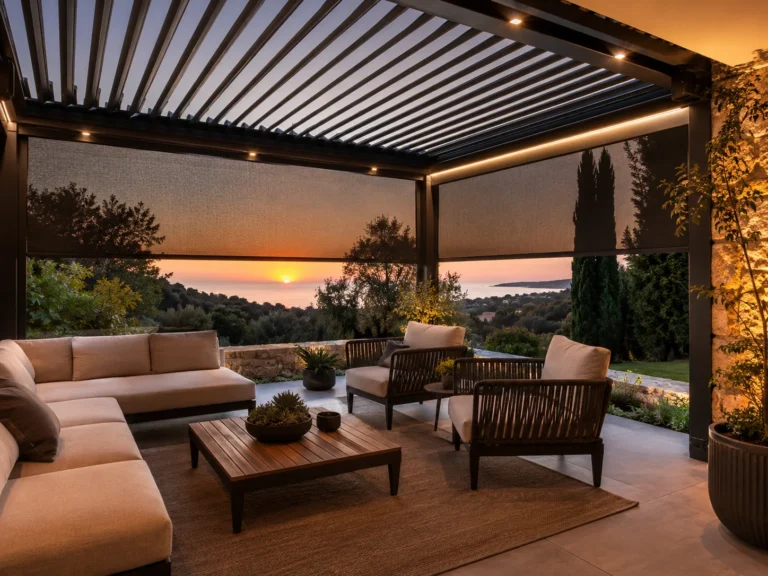
- Use of natural materials: Integrating real wood, stone, and natural fibers into the construction provides not only structural durability but also “warmth.” People react positively to natural textures compared to sterile, industrial plastics.
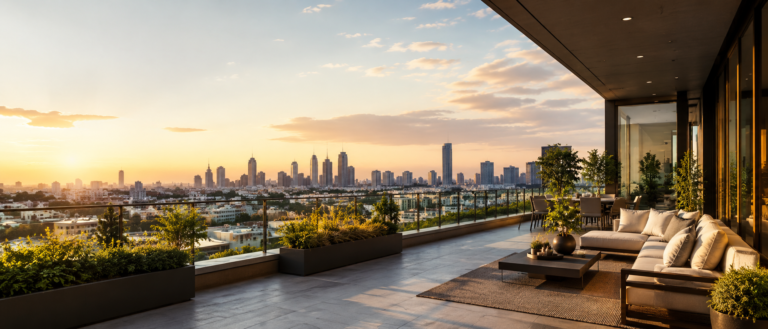
- Direct contact with the outdoors: Designing internal courtyards, large verandas, green walls, and visual contact with the natural landscape (framing the view) lowers blood pressure and improves mental clarity.
4. The Power and Psychology of Colors
This is perhaps the most well-known aspect of spatial psychology, and rightfully so. Color is not just decoration; it is frequency and light that our brain absorbs.
- Warm Colors (Red, Orange, Yellow): They stimulate the brain, increase energy, and promote sociability. They are ideal for dining areas, kitchens, or playrooms, but should be used in moderation so as not to cause overstimulation.
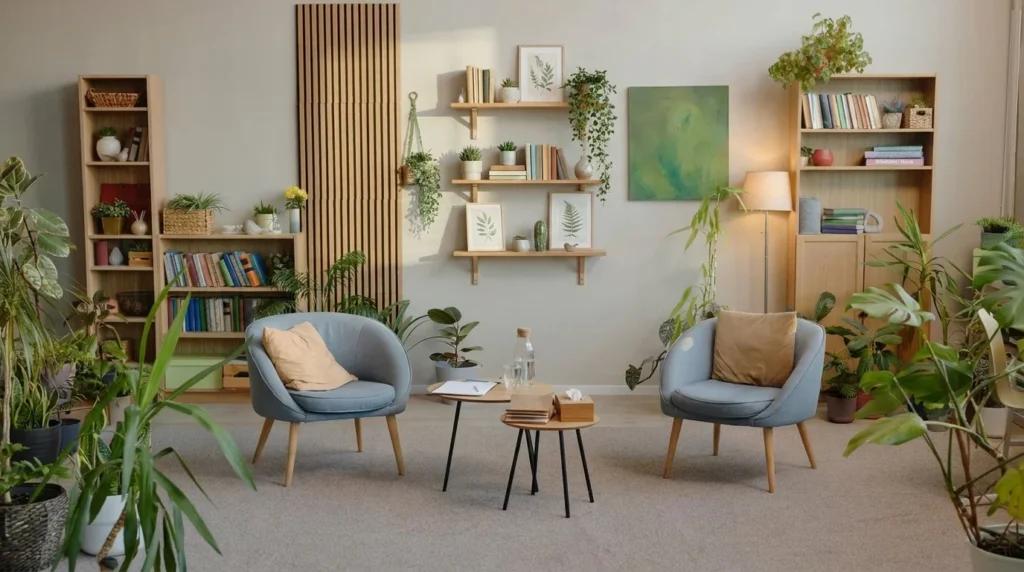
- Cool Colors (Blue, Green): They bring to mind the sky, the sea, and the forest. They lower the heart rate and offer tranquility. They are perfectly suited for bedrooms, bathrooms, and study areas.
- Neutral Tones (Earthy colors, White, Gray): They provide a “blank canvas” for the mind, aiding concentration and creating a sense of order and cleanliness.
As professionals, we know that the performance of colors depends directly on the natural and artificial lighting of the space. A wonderful gray might look “cold” and depressing in a north-facing room, but elegant and modern in a south-facing room.
5. Acoustic and Thermal Comfort: The “Invisible” Factors
Very often, we focus on how a space looks, forgetting how it sounds and how it feels on our skin.
Acoustics: In a world full of noise from the street, cars, or neighbors, noise pollution is a major source of chronic stress.
- The Construction Solution: Proper soundproofing of walls (with rock wool or specialized acoustic panels), the installation of high-quality window frames, and the use of sound-absorbing materials (rather than those that reflect it, causing echoes) turn the house into a true sanctuary.
Thermal Comfort: A poorly insulated house, which is excessively cold in winter and hot in summer, causes permanent physical discomfort that translates into a bad mood.
- The Construction Solution: Our modern constructions place enormous emphasis on thermal facades, energy upgrades, and “smart” cooling/heating systems. The ideal microclimate of the home creates a subconscious feeling of “safety” and “care.”
In Conclusion: Investing in Your Mental Health
Creating the ideal space is a complex equation that combines the science of engineering with a deep understanding of human nature. The proper construction or renovation of a space is not just an upgrade to your real estate; it is a long-term investment in your mental health, family harmony, and daily well-being.
At our company, we listen carefully not only to how you want your new home or office to look, but mostly to how you want to feel inside it. Guided by the psychology of space and armed with our construction excellence, we build spaces that embrace you, inspire you, and truly upgrade your quality of life.