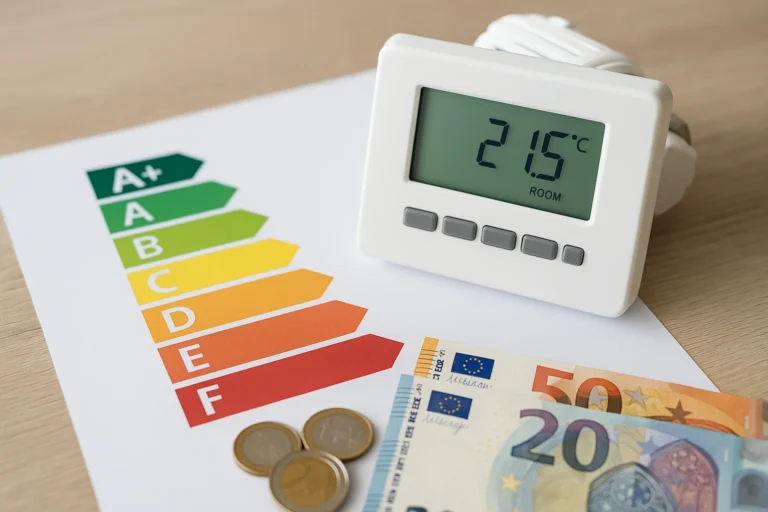


The Complete Guide to Health, Efficiency, and Savings
Air conditioning systems are an integral part of our daily lives, both during the hot summer months and throughout the winter for space heating. Despite their continuous and extensive use, unit maintenance and cleaning are often neglected or postponed until a serious breakdown occurs.
Regular air conditioner care is not just a routine household task, but a substantial investment in the health of occupants, energy savings, and the longevity of the appliance itself.
Why Regular Cleaning Is Essential
When an air conditioner operates, it constantly recirculates indoor air. Along with the air, the unit absorbs dust, pollen, pet hair, smoke, and microparticles. Over time, these pollutants accumulate on the filters, heat exchanger coils, and internal components of the unit.
1. Indoor Air Quality and Health
The moisture created by condensation inside the unit, combined with accumulated dust, creates the ideal environment for the growth of fungi, bacteria, mold, and dust mites.
When the system is turned on, these germs and allergens are dispersed into the air we breathe. This can cause or aggravate:
- Respiratory problems (asthma attacks, coughing, shortness of breath).
- Allergic reactions (sneezing, rhinitis, eye irritation).
- Headaches and fatigue, a phenomenon also known as “sick building syndrome.”
- Severe infections, such as Legionnaires’ disease (Legionella), which develops in neglected ventilation and air conditioning systems.
2. Energy Efficiency and Cost Reduction
A dirty air conditioner is forced to work much harder to reach the desired temperature. Clogged filters and layers of dust on the heat exchangers prevent free airflow and proper heat transfer.
This leads to:
- An increase in electricity consumption by up to 30%, significantly inflating utility bills.
- Reduced cooling or heating performance, resulting in the space never reaching the correct temperature.
3. Fault Prevention and Extended Lifespan
When the compressor and fan are forced to operate under high resistance due to debris, they suffer excessive wear and tear. Preventive maintenance drastically reduces the likelihood of sudden breakdowns during peak season and extends the lifespan of the appliance by several years.
Basic Do-It-Yourself (DIY) Maintenance Tasks
While a comprehensive technical inspection requires a specialized HVAC technician, there are some simple steps every user can perform on a regular basis.
Cleaning the Air Filters
Filters are the first line of defense for your air conditioner. Cleaning them should be done every 30 to 60 days during periods of heavy use.
- Power Off: Turn off the device and disconnect it from the power supply for safety reasons.
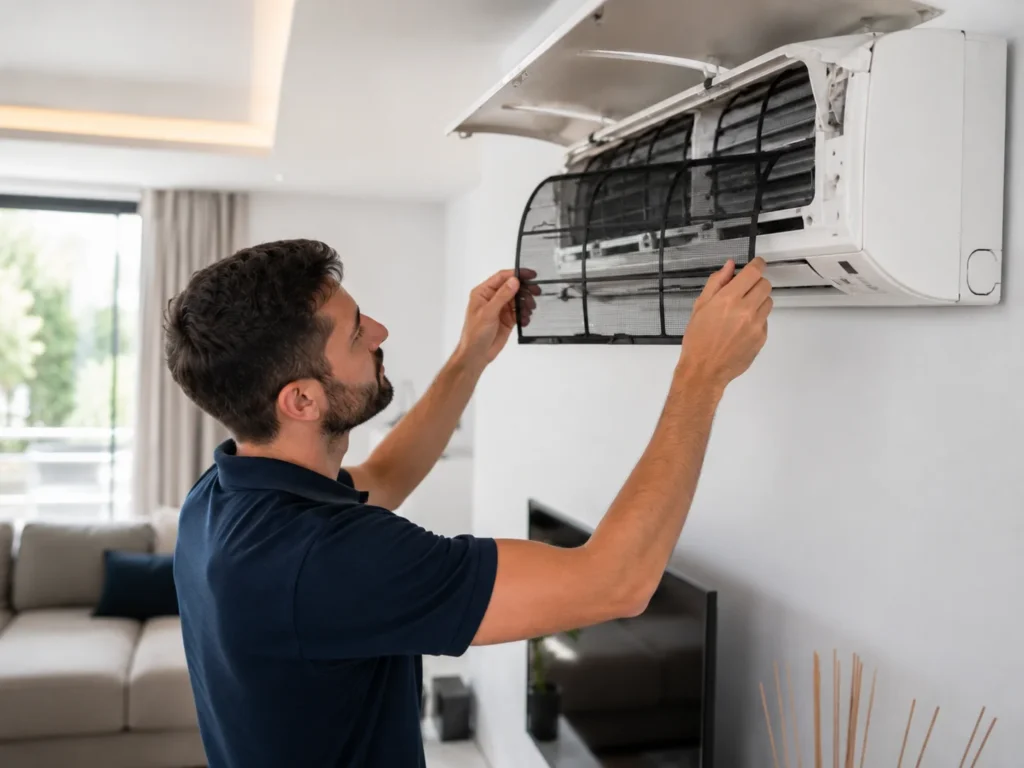
- Removal: Open the front cover of the indoor unit and carefully remove the plastic filters.
- Cleaning: Remove dust using a vacuum cleaner or wash the filters with running lukewarm water and mild soap. Avoid hot water and harsh chemicals.
- Drying: Allow the filters to dry completely in a shaded area before reinstalling them. Do not place wet filters back into the unit.
Cleaning Exterior Surfaces
- Wipe the plastic outer casing of the indoor unit with a damp cloth.
- Ensure the directional louvers are clean and move freely.
Outdoor Unit Care
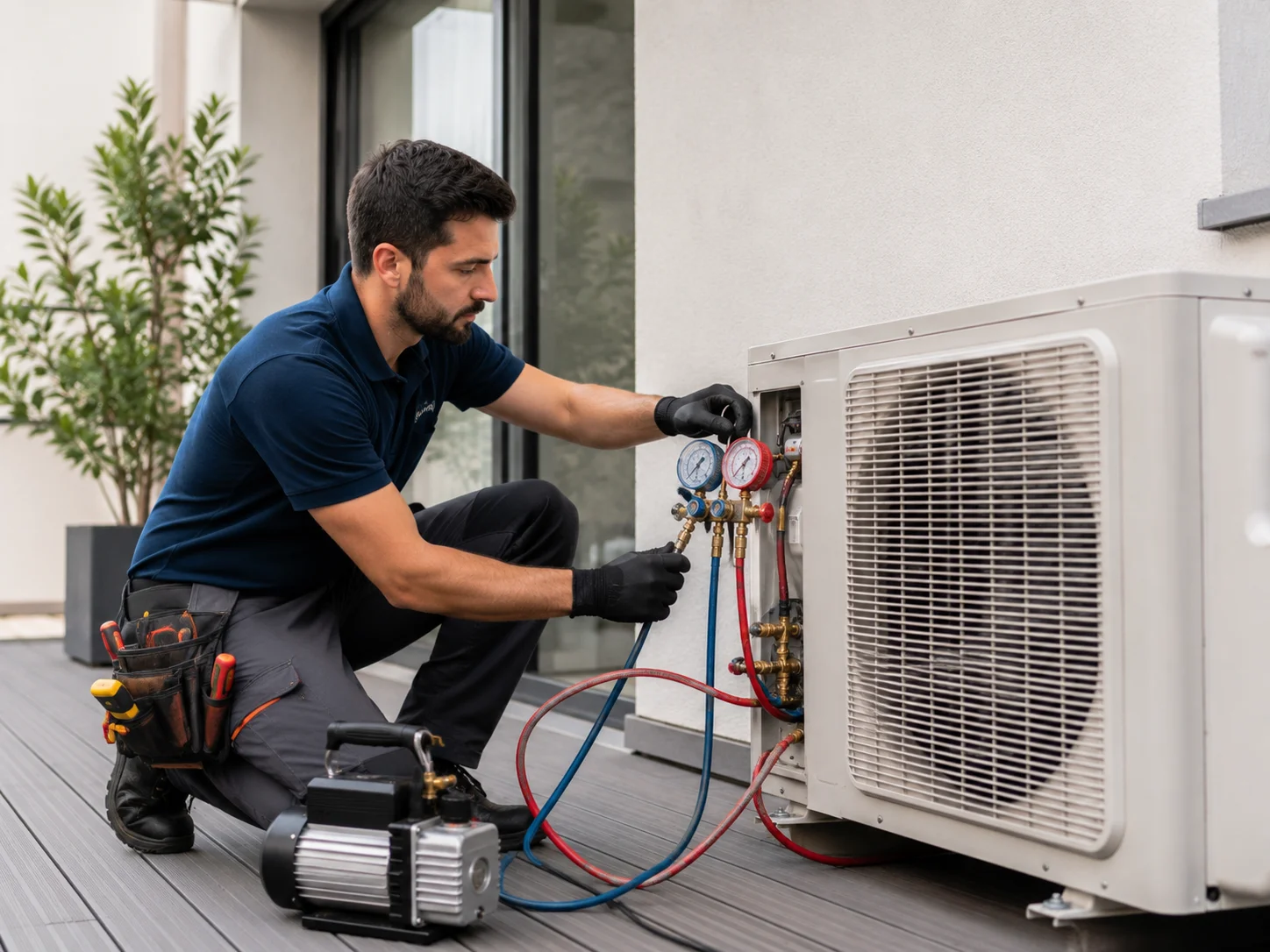
- Check for leaves, branches, or other debris around the outdoor unit.
- Maintain a clearance of at least 50 centimeters (about 20 inches) around the unit to ensure proper airflow.
What Professional Maintenance Includes
Annual maintenance by a certified HVAC technician is essential, as it involves specialized tasks and checks that cannot be performed without the appropriate equipment.
| Inspection Area | Professional Task | Purpose |
| Indoor Unit | Chemical cleaning of coil & blower wheel | Elimination of mold, bacteria, and odors |
| Drainage System | Cleaning & disinfection of condensate pan | Prevention of clogs and water leaks |
| Refrigerant Circuit | Pressure check & refrigerant leak detection | Maintenance of maximum cooling performance |
| Electrical Components | Terminal tightening & capacitor/current measurement | Safety and short-circuit prevention |
| Outdoor Unit | Condenser washing & fan inspection | Proper heat dissipation into the environment |
Chemical Sanitizing Clean
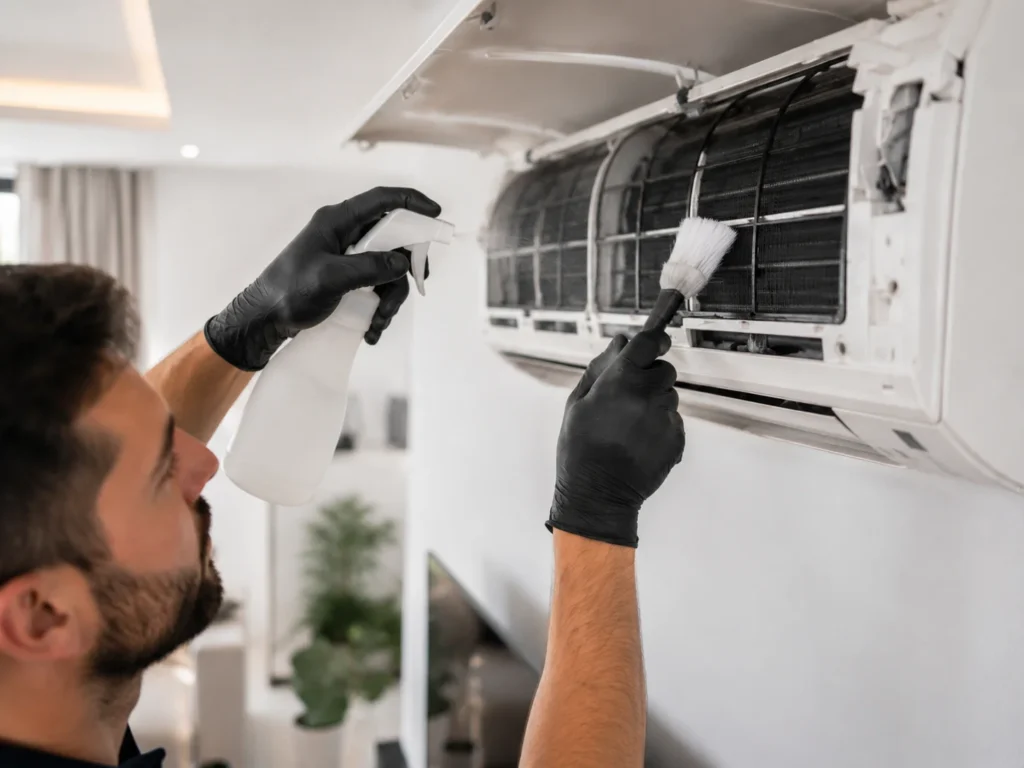
The technician sprays the heat exchanger coils and blower wheel with specialized, approved antibacterial and antifungal solutions. These formulations dissolve layers of deposits and neutralize the microorganisms responsible for unpleasant odors.
Refrigerant Check (Freon)
A lack of refrigerant indicates a leak in the circuit. The technician measures the operating pressure, locates any leak points, repairs them, and tops up the required amount of refrigerant.
Signs Your Air Conditioner Needs Immediate Service
In addition to scheduled annual maintenance, there are several warning signs indicating that the unit requires immediate attention:
- Unpleasant Odors: A musty or stale smell immediately after turning on the device indicates advanced bacterial growth inside.
- Reduced Airflow or Cooling: Air comes out with weak intensity or is not as cold/warm as it should be.
- Water Leaks: Water dripping or flowing from the indoor unit down the wall indicates a clogged drain pipe.
- Unusual Noises: Squeaking, humming, or metallic noises from the indoor or outdoor unit point to loose components or worn motor bearings.
- Unexplained Increase in Energy Bills: A sudden spike in electricity costs without a change in usage habits.
Maintenance Frequency and Ideal Timing
The recommended maintenance frequency depends on usage and the environment in which the unit is located:
- Residential Units: Professional maintenance is required once a year. The ideal period is spring (before the start of the summer season) or autumn (before the cold winter days).
- Commercial Spaces & Offices: Due to continuous operation and higher pollutant loads, maintenance twice a year is recommended.
- Environments with Pets or High Dust: Frequent filter cleaning is required (every 2–3 weeks).
Systematic care of air conditioning systems ensures a clean and healthy living environment, protects the household budget from unexpected repair costs, and contributes significantly to energy savings.