

A garden is much more than just a piece of land around a house. It is our personal sanctuary, an oasis of tranquility that connects us with nature, a space for creation, celebration, and relaxation. In modern times, where the pace of life is fast and stress dominates, the need for a well-designed outdoor space is more pressing than ever. Landscaping a garden is not merely an aesthetic intervention, but an investment in our quality of life and mental well-being.
In this article, we will explore step-by-step the secrets and principles of landscape architecture to help you transform your outdoor space into a true earthly paradise.
1. The Importance of Initial Assessment: Knowing Your Canvas
Every great work of art begins with understanding the canvas. Before buying plants or materials, it is crucial to study your space’s current conditions. Rushing this stage often leads to costly mistakes.
- Soil Analysis: Soil is the foundation of your garden’s life. Is it clay, sandy, or rich in organic matter? Knowing the pH and composition of the soil will determine which plants can thrive and what kind of soil amendments you might need.
- Orientation and Microclimates: Observe how the sun moves throughout the day and how shadows from buildings or trees change across different seasons. Identify which spots are exposed to strong winds and which are protected (these form the microclimates of your garden).
- Topography and Slopes: If your space is sloped, consider how you will manage rainwater. Terraces built with stone retaining walls are not only practical but also add architectural drama to the landscape.
2. Zoning: Creating “Rooms” in Nature
The most successful gardens are those with a clear structure and purpose. Just as a house is divided into rooms, a garden becomes much more engaging when divided into distinct functional zones that harmoniously connect with each other.
Building the Zones
- Relaxation Zone (Lounge area): Place this in a quiet spot, perhaps under the natural shade of a large tree or a pergola. Comfortable outdoor sofas, hammocks, or bean bags fit perfectly here.
- Dining Area (Al fresco dining): For practical reasons, this should ideally be located relatively close to the indoor kitchen, unless you plan to build a fully equipped outdoor kitchen or BBQ area.
- Play and Activity Area: If you have children or pets, a durable patch of lawn (or a suitable alternative ground cover) is essential. Keep this area away from fragile flowers and sharp objects.
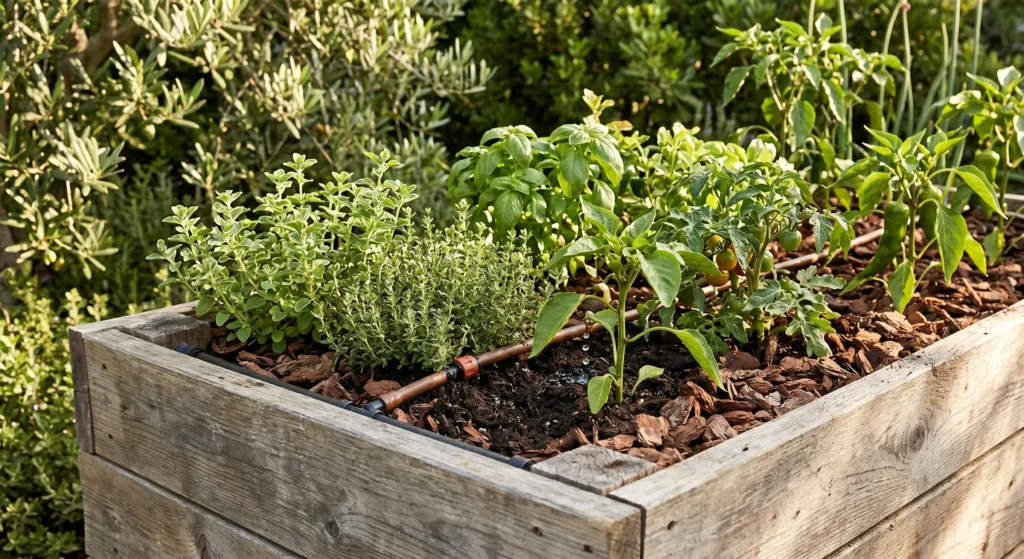
- The Productive Garden: Even in small spaces, a raised bed filled with vegetables and herbs offers the joy of cultivation and healthy eating.
3. Landscape Architecture (Hardscaping)
“Hardscaping” refers to the non-living, structural elements of the garden, such as paths, walls, patios, and built structures. These elements form the skeleton of your paradise.
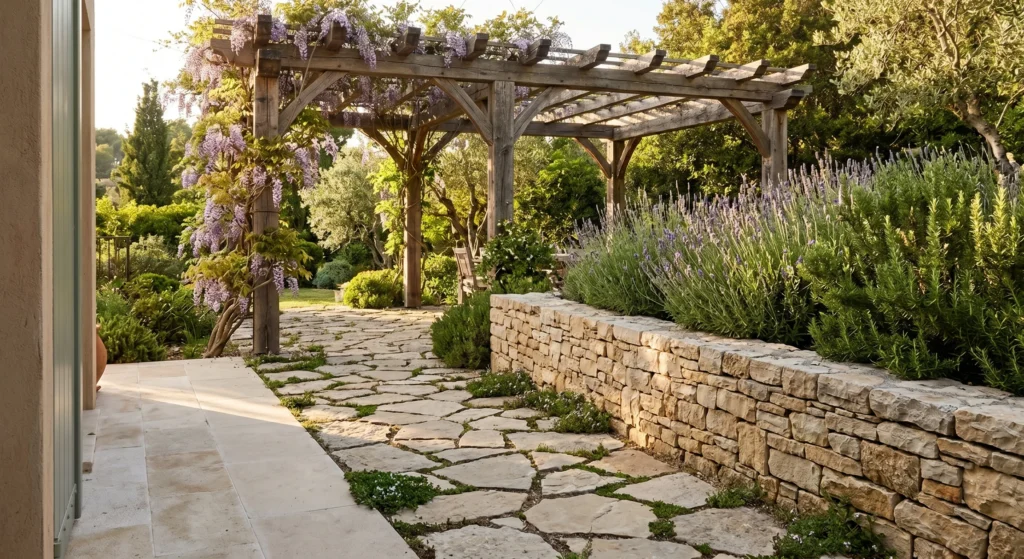
Paths as Guides: A gently curving path made of natural stone, gravel, or wood invites visitors to explore the space, naturally slowing their pace and allowing them to absorb the surroundings. Avoid strict, straight lines if you want a more organic, natural feel.
Material Selection: Your choice of materials should align with the architecture of your home. Rough wood and natural stone suit rustic or Mediterranean styles, while smooth concrete, Corten steel, and sleek porcelain tiles blend seamlessly with modern and minimalist residences.
Vertical Elements: Pergolas, trellises, and arches add height and dimension. They act as supports for climbing plants like bougainvillea, jasmine, or wisteria, creating living, shaded walls and ceilings.
4. Plant Selection: The Soul of the Garden
Plants are the paint on your canvas. The right selection of plants is what will give your garden life, movement, fragrance, and seasonal interest.
The Planting Strategy
The golden rule: Design in layers. Start with the tallest plants (trees) in the background, move to medium-sized shrubs in the middle, and finish with low herbaceous plants and ground covers at the front of the garden beds.
- The Foundation – Trees and Large Shrubs: These provide structure throughout the year. Combine evergreen trees (which keep their leaves in winter, providing privacy) with deciduous trees (which offer shade in summer but allow the winter sun to warm the space).
- Color and Texture – Perennials and Annuals: Perennial plants return every year and form the backbone of your floral design. Enrich them with seasonal annuals for bold splashes of color. Play with textures: mix plants with large, glossy leaves next to those with fine, airy foliage (like ornamental grasses).
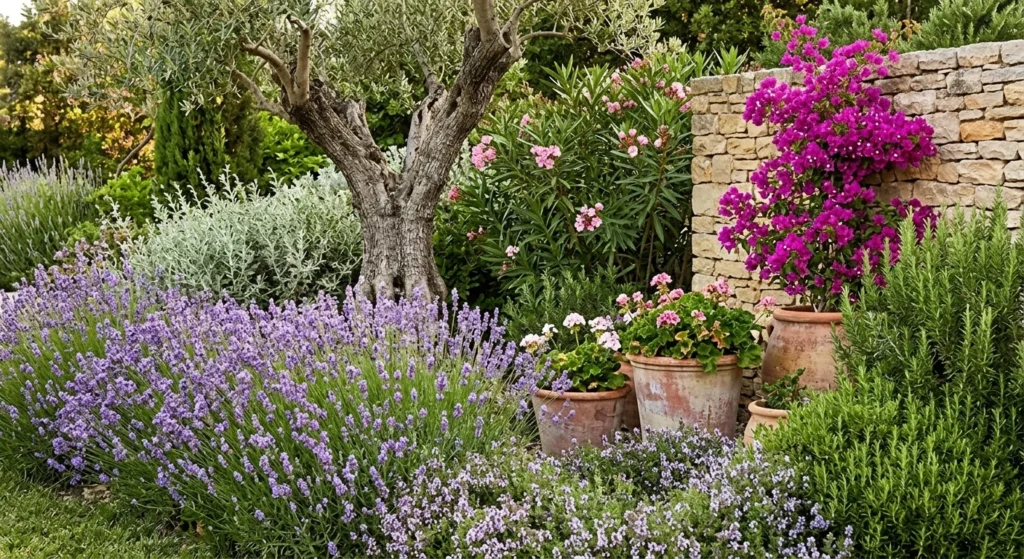
- The Mediterranean Approach (Xeriscaping): Depending on your climate, water-wise choices are often necessary. Turn to Mediterranean flora. Lavender, rosemary, thyme, olive trees, oleander, and pelargoniums are not only beautiful but also perfectly adapted to high temperatures and require minimal watering.
- Scents that Awaken the Senses: Plant aromatic herbs near seating areas or along paths so they release their fragrance as you brush past them. Night-blooming jasmine or gardenias placed in strategic spots can turn a summer evening into a magical experience.
5. The Element of Water and Magical Lighting
Two often-overlooked elements that make the difference between a good garden and an “earthly paradise” are water and light.
The Power of Water:
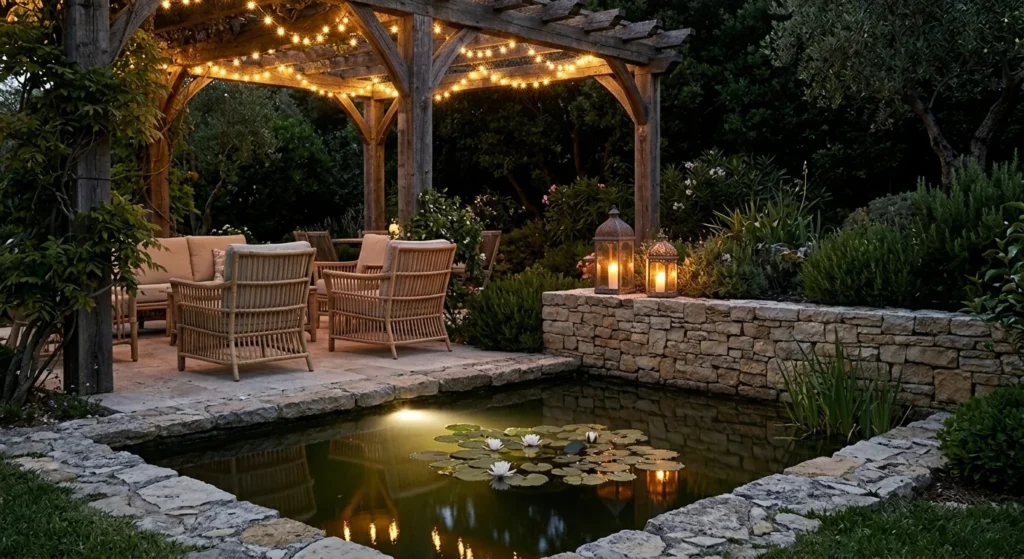
The sound of running water is perhaps the most relaxing acoustic stimulus in nature. Additionally, it has the ability to mask unwanted noise from the city or street. You don’t need a huge space for this. A small pond, a wall-mounted fountain, or a stone trough with a simple recirculating pump is enough to bring the space to life while attracting beneficial birds and insects.
Directing with Light:
When night falls, the garden shouldn’t disappear. Proper lighting creates atmosphere, depth, and safety.
- Ambient lighting: Use hidden LED strips around flower beds or under steps. String lights draped over the dining area give a festive, bohemian-chic elegance.
- Architectural lighting: Place spotlights at the base of beautiful trees (uplighting) to highlight their trunks and foliage in the dark.
6. Sustainability, Ecology, and Maintenance
A true paradise must respect the environment that hosts it. A sustainable garden protects natural resources and significantly reduces maintenance time and costs.
| Sustainability Practices | Benefits for Your Garden |
| Automated Irrigation | Drip irrigation systems direct water straight to the roots, reducing evaporation and cutting water consumption by up to 50%. |
| Composting | By recycling organic kitchen waste and fallen leaves, you create the best—and free—natural fertilizer. |
| Mulching | Covering garden beds with pine bark or wood chips retains soil moisture, regulates root temperature, and suppresses weeds. |
| Protecting Pollinators | By choosing nectar-rich flowers, you attract bees and butterflies, contributing to local biodiversity. |
The Reality of Maintenance:
Be honest with yourself about the time you can dedicate to upkeep. If your time is limited, avoid large expanses of natural lawn (which require constant mowing, watering, and fertilizing) and opt instead for larger areas of gravel, paving, and beds filled with hardy, native shrubs.
7. The Final Touch: Furniture and Decor
Once the hardscaping and softscaping are complete, it’s time for the final details. The choice of garden furniture should combine weather resistance (teak, aluminum, synthetic rattan) with deep comfort. Add waterproof cushions in vibrant colors or geometric patterns to inject personality.
Don’t forget the decor: Terracotta or ceramic pots, a striking garden sculpture, outdoor rugs, metal lanterns with candles, or even a fire pit for cool spring and autumn evenings add warmth and complete the aesthetic.
Epilogue: A Living Work of Art
Landscaping a garden is not a process that is completed in a single day. Unlike the interior of a house, which remains mostly static, a garden is a living organism. It changes with the seasons, grows, blooms, sheds its leaves, and transforms year after year.
Designing an earthly paradise requires vision, patience, and love. But the reward—that first May morning when you step outside with your coffee in hand, hear the rustling leaves, smell the jasmine, and sit in your own private oasis—is worth every second of the effort. So step outside, dream up your space, and start digging your way to your personal paradise.