
21st-century architecture is defined by a continuous quest for light, openness, and sustainability. If there is one material that has managed to transform the urban landscape more than any other, it is undoubtedly glass. From the imposing skyscrapers of financial centers to modern bioclimatic residences, glass facades (curtain walls) are no longer just an aesthetic choice, but a complex technological solution.
In this article, we will analyze how glass evolved from a “fragile” material into a structural pillar of modern construction.
1. The Evolution of Glass Facades
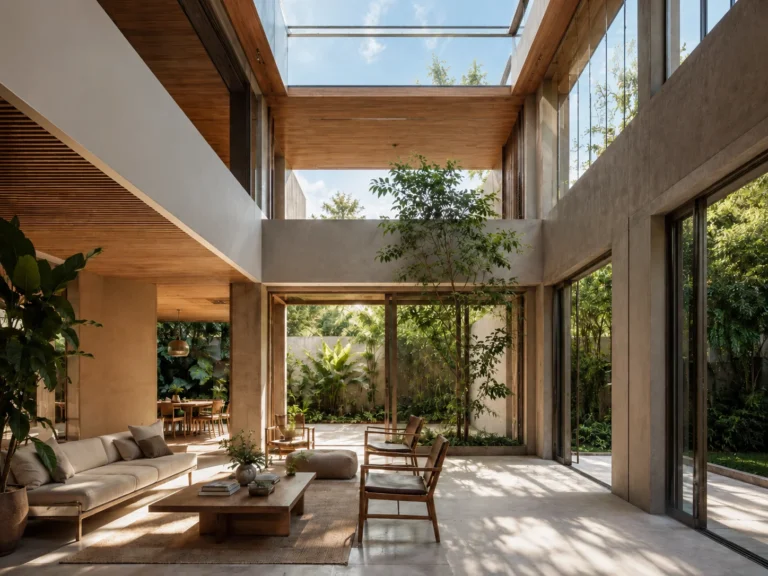
In the past, glass was limited to small openings due to its thermal losses and structural weakness. Today, structural glazing technology allows for the creation of facades that cover entire buildings, eliminating the boundaries between interior and exterior spaces.
Modern methods, such as Unitized (prefabricated panels) and Stick (on-site assembly) systems, offer unparalleled construction speed and absolute weather tightness.
2. Energy Efficiency and Sustainability
The biggest challenge of a glass facade has always been heat management. The modern industry has provided the solution with Energy-Efficient Glass (Low-E).
- Low-E Coatings: These are microscopic layers of metal that reflect infrared radiation. In the summer, they prevent heat from entering, while in the winter, they keep the heating inside.
- Double and Triple Glazing: The space between the glass panes is filled with noble gases (such as Argon), dramatically reducing the thermal transmittance coefficient.
- Double Skin Facades: An advanced solution where two layers of glass create an intermediate air chamber, acting as a natural ventilation and insulation system.
3. Natural Lighting and User Psychology
The use of glass is not just about energy savings, but also about human well-being. Studies show that exposure to natural light:
- Increases productivity in workspaces by up to 15%.
- Improves mood and reduces stress (Biophilic Design).
- Reduces the need for artificial lighting, limiting the environmental footprint.
4. Safety and Structural Adequacy
One of the biggest myths is that glass is dangerous over large areas. Modern construction standards require the use of special types of glass:
- Tempered Glass: It is 4-5 times stronger than regular glass and, in the event of breakage, it shatters into small, harmless pieces.
- Laminated Glass: It consists of two or more sheets of glass with an intermediate PVB interlayer. Even if it breaks, the shards remain adhered to the membrane, preventing injuries or falls.
One of the biggest myths is that glass is dangerous over large areas. Modern construction standards require the use of special types of glass:
- Tempered Glass: It is 4-5 times stronger than regular glass and, in the event of breakage, it shatters into small, harmless pieces.
- Laminated Glass: It consists of two or more sheets of glass with an intermediate PVB interlayer. Even if it breaks, the shards remain adhered to the membrane, preventing injuries or falls.
5. The Aesthetics of the Modern Facade
Glass offers architects a unique “toolkit”:
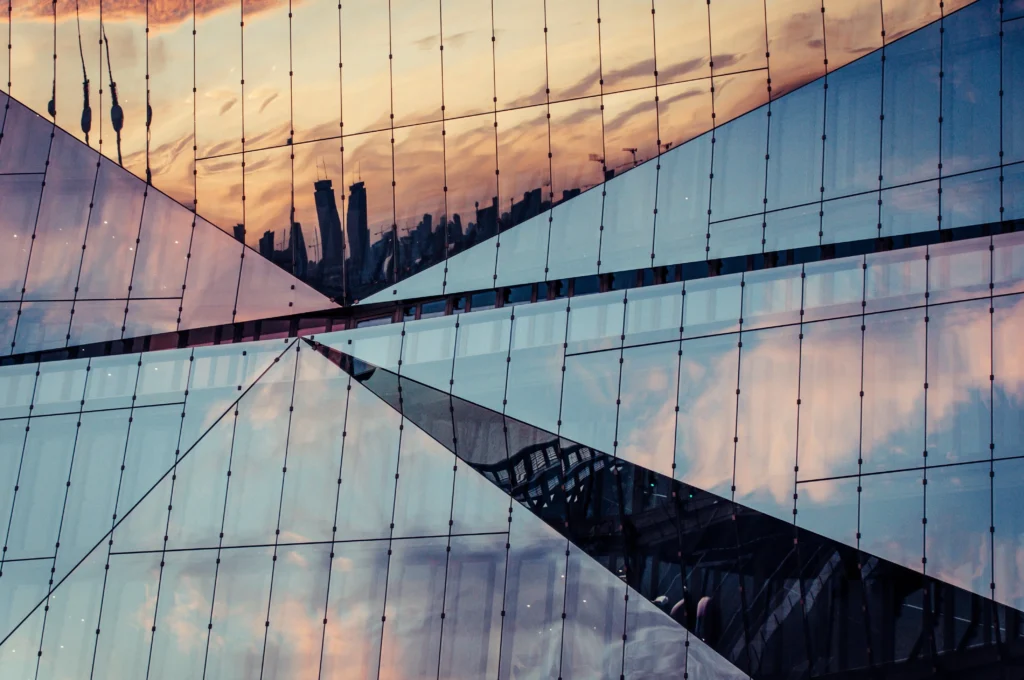
- Mirror Glass: For impressive reflections of the sky and the surrounding environment.
- Frit Glass: Glass with printed patterns that offer shading and privacy.
- Curved Surfaces: The ability to create curved glass gives an organic form to buildings, breaking the rigidity of straight lines.
6. Maintenance Challenges
Despite its advantages, a glass facade requires a proper maintenance plan. The accumulation of dirt can affect both aesthetics and performance.
- Self-cleaning Glass: Special photocatalytic coatings use ultraviolet radiation and rainwater to remove dirt and pollutants.
- BMU (Building Maintenance Units): The provision for permanent cleaning systems on the roof is essential for large-scale buildings.
7. The Future: “Smart” Facades
Technology doesn’t stop here. The future of glass facades includes:
- Electrochromic Glass (Smart Glass): Glass that darkens automatically at the push of a button or via sensors, controlling light and heat without the need for blinds.
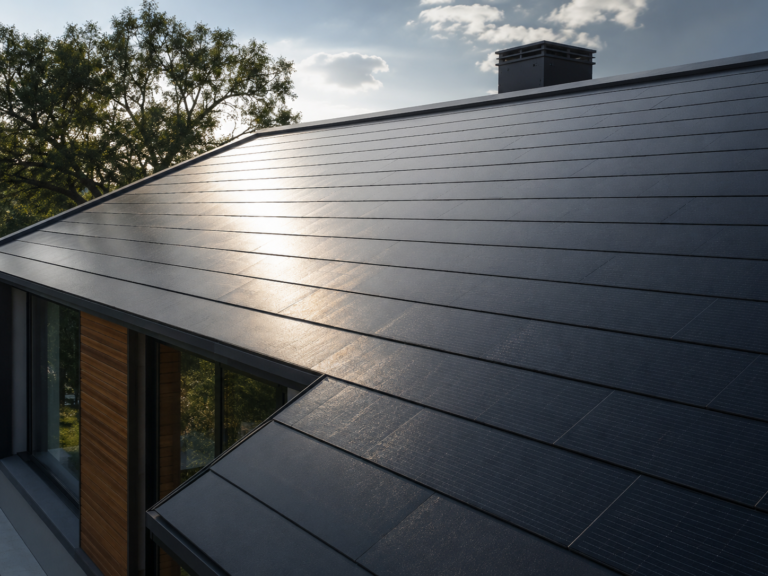
- BIPV (Building Integrated Photovoltaics): Glass facades that incorporate photovoltaic elements, turning the entire building into a clean energy generator.
Conclusion
The use of glass in modern facades is not just a design trend, but a conscious choice for brighter, more sustainable, and functional buildings. In our company, this philosophy does not remain on paper, but becomes a reality in the most impressive way.
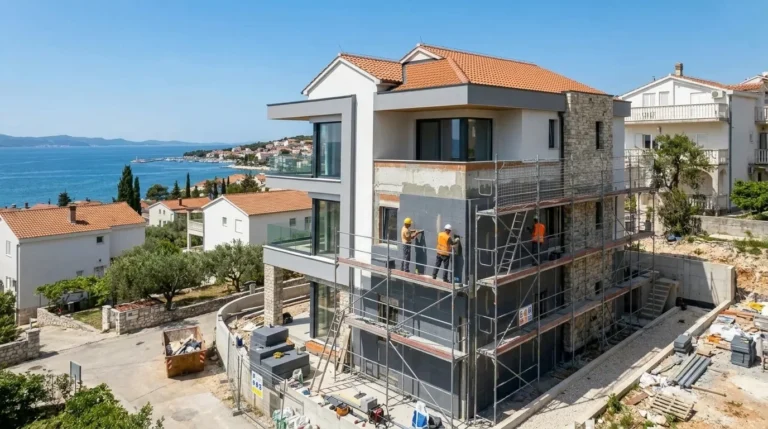
An excellent and representative example of the application of these advanced systems is the Efkarpia Commercial Center (The Link). In this specific project, the modern glass facades we installed do not merely upgrade the architectural identity and commercial value of the building, but they also ensure abundant natural lighting and optimal energy performance for the commercial spaces.
Transparency is no longer the future of construction—it is the present we are already building.