
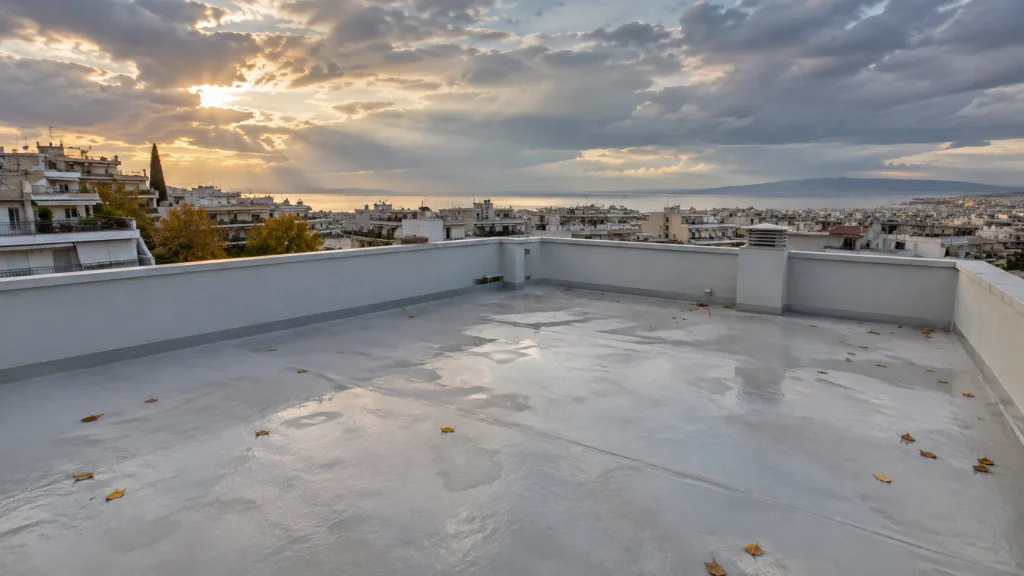
The roof of a building acts as the “shield” of our home against weather phenomena. As summer gives way to autumn and the first rains approach, most of us focus on the interior of the house, neglecting the most critical point: the exterior surface of the roof. Timely and proper roof maintenance can save you from dampness, mold, damage to the building’s reinforcement, and, of course, exorbitant repair costs in the future.
In this article, as experts in construction and renovation, we will examine step-by-step how to check your roof’s waterproofing, which signs indicate a problem, and what the best solutions are to protect your property.
1. Why Roof Maintenance is Critical in Autumn
During the summer months, roof waterproofing materials undergo immense stress. High temperatures, solar radiation (UV), and thermal expansion-contraction cause damage, cracks, and loss of elasticity in insulation materials.
When the first rains fall, water will find even the slightest imperfection. If there is even a small crack, water penetrates, gets trapped under the insulation, and gradually reaches the concrete slab. This results in:
- Appearance of dampness and mold on the walls and ceilings of the top floor.
- Oxidation of the steel reinforcement of the slab (reinforced concrete), which weakens the structural integrity of the building.
- Destruction of paintwork and interior finishes.
2. Self-Inspection Guide: How to Check the Roof Yourself
Before calling a professional—or alongside one—you can make an initial assessment of your roof’s condition by following these steps:
Surface Cleaning
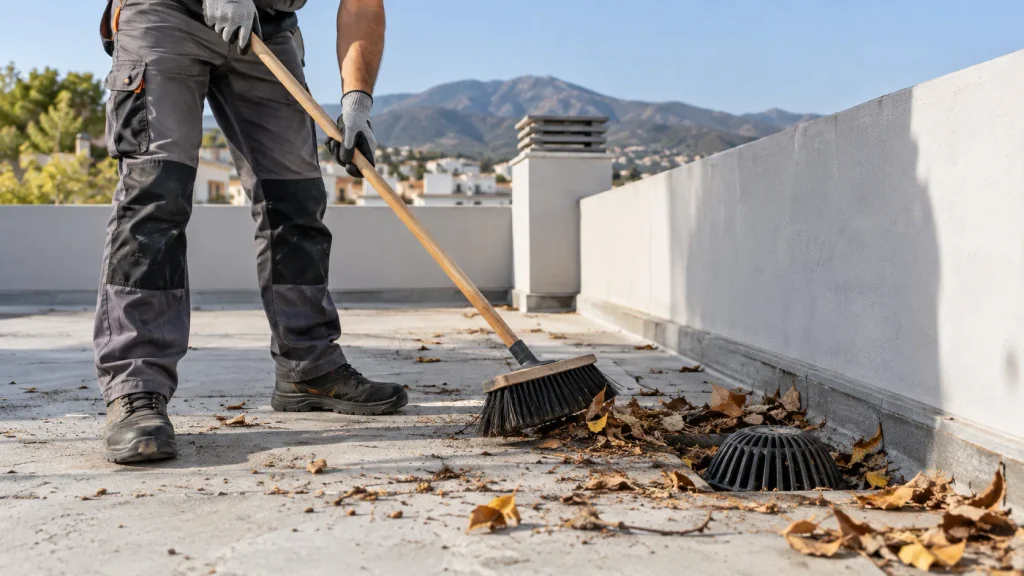
Start by removing leaves, branches, dust, and any debris. Drains and sewage siphons must be completely clean to allow unobstructed water flow.
Slope Check
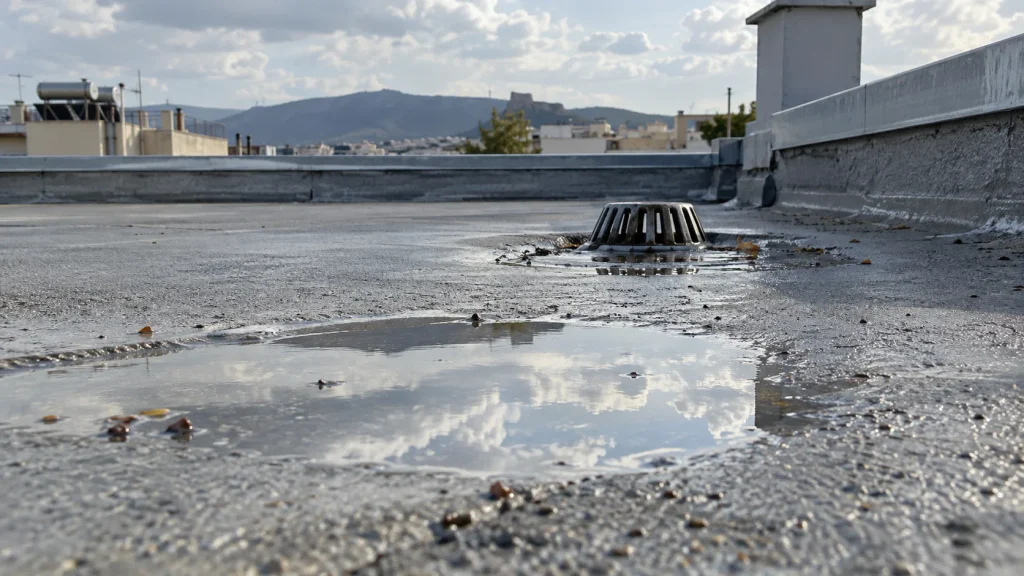
Pour a few buckets of water onto the roof (or observe it after a light rain). Water should flow smoothly toward the siphons. If you notice pools of water standing in certain areas, there is a slope problem, which prematurely wears down the waterproofing.
Locating Cracks and Damage
Examine the entire surface carefully. Look for:
- Hairline or larger cracks in the existing insulating material (asphalt membrane, polyurethane, acrylic paints).
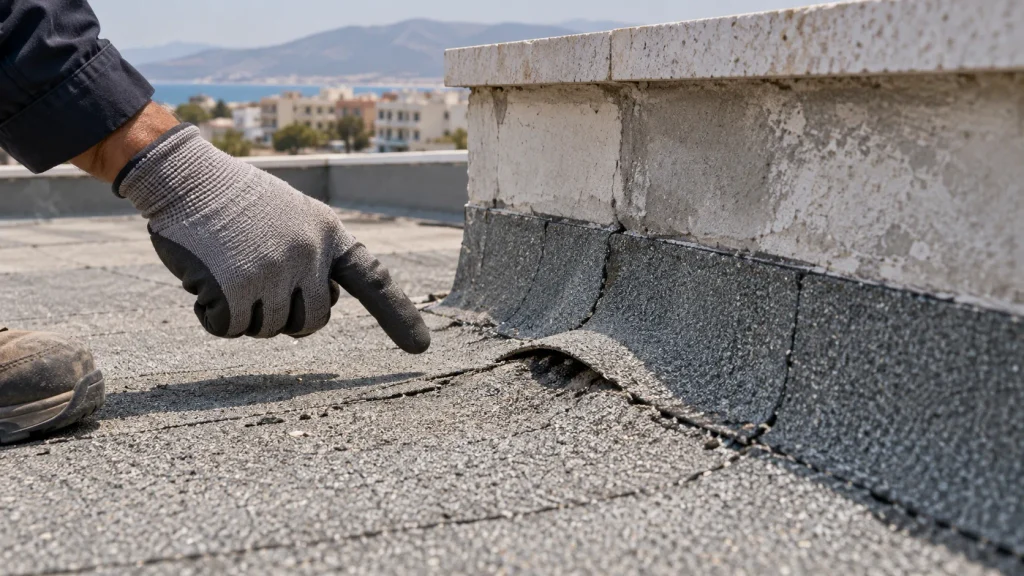
- Blisters in the asphalt membrane, which indicate that moisture has been trapped underneath.
- Delamination of materials around parapets, chimneys, antenna bases, and vents.
3. Modern Waterproofing Methods: Which Solution to Choose
Depending on your roof type, available budget, and existing damage, there are excellent options on the market:
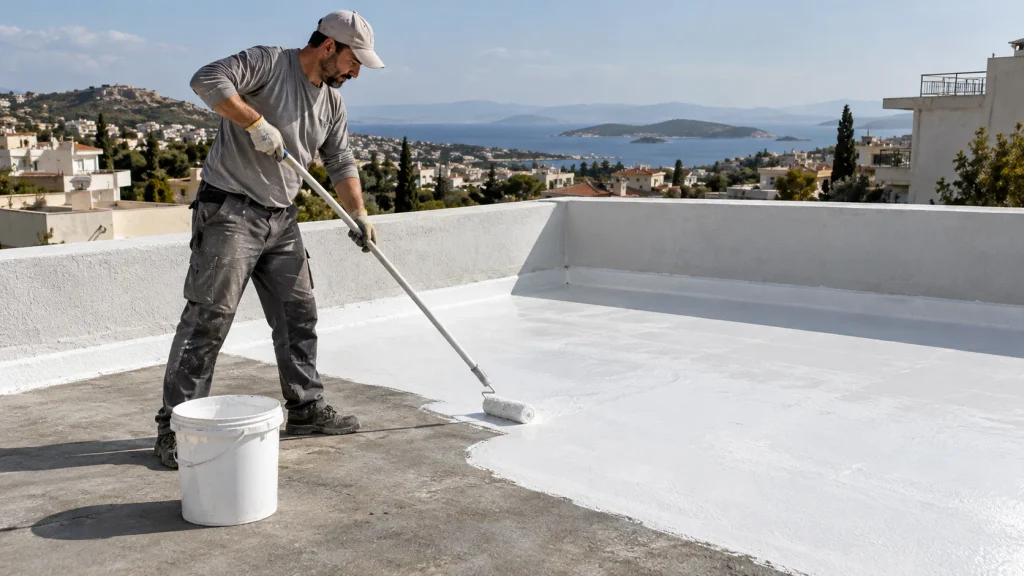
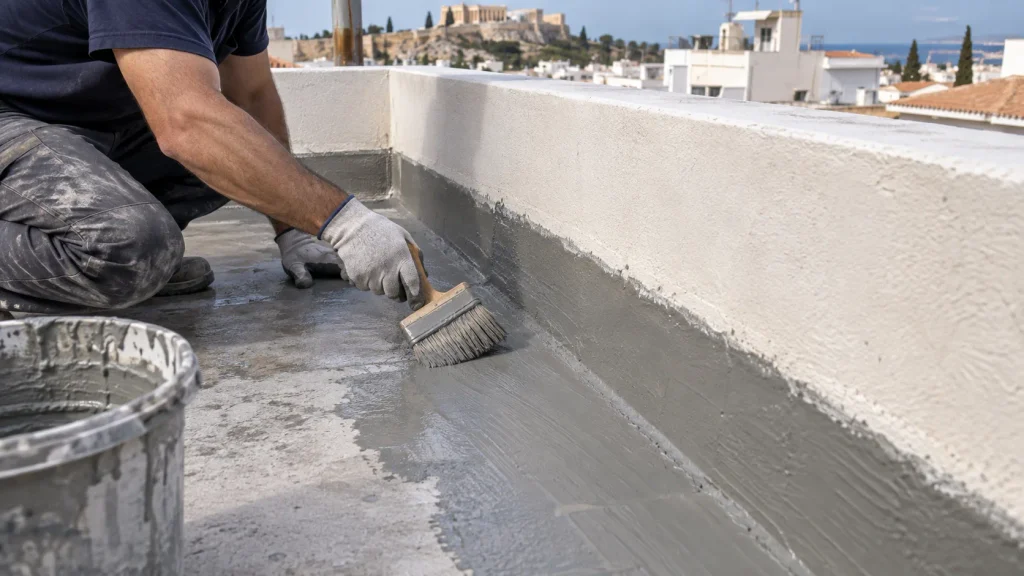
- Liquid Waterproofing with Polyurethane Membranes: These are cold-applied systems applied by roller or spray, creating a seamless, elastic membrane. They have excellent resistance to ultraviolet (UV) radiation and follow the building’s expansions and contractions.
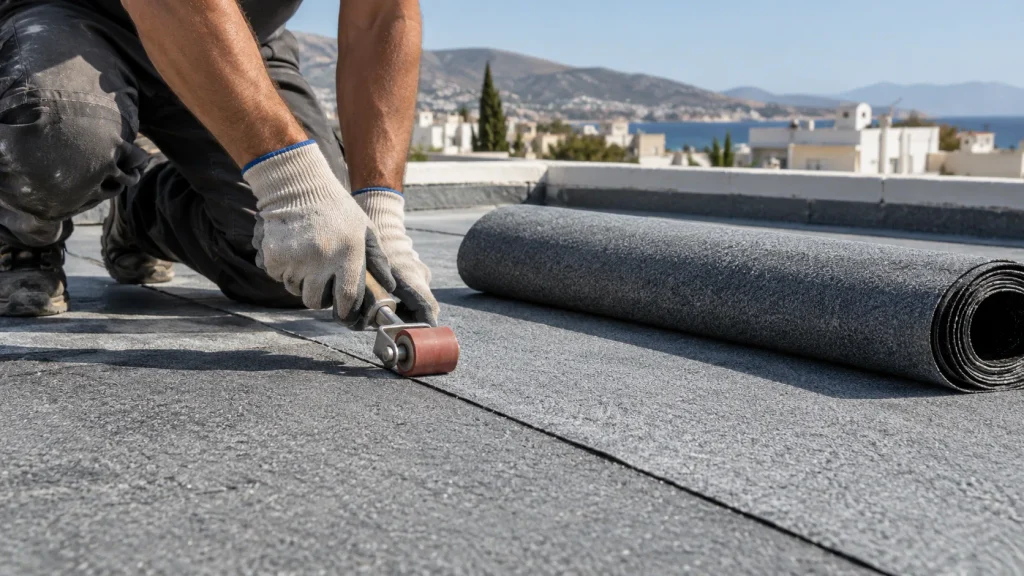
- Asphalt Membranes (Bituminous Membranes): A classic and reliable solution. Mineral-surfaced asphalt membranes in particular offer high resistance to mechanical stress and sunlight. However, they require care during torch application, especially at joints and junctions with parapets.
- Cementitious Waterproofing: Used mainly on surfaces that will be covered with tiles or as a substrate for stronger insulations.
4. Expert Tips for Long-Term Protection
- Don’t wait until the last minute: Waterproofing work usually requires suitable weather conditions (without high humidity or rain). September and October (before low temperatures set in) are ideal months.
- Don’t forget thermal insulation: If your roof does not have thermal insulation, consider a thermal-waterproofing system (inverted insulation). It will protect you from the heat in summer and the cold in winter, drastically reducing energy bills.
- Trust professionals: The application of insulating materials is not a job for amateurs. Incorrect application methods or skipping substrate preparation (priming) can ruin your entire investment.
Conclusion
Your roof needs care before facing harsh autumn and winter weather. A timely check today protects you from costly repairs tomorrow and ensures a healthy, warm, and dry environment for you and your family.