
What Are Prefab and Modular Construction, Where Are They Used, What Are Their Advantages, and What Should Property Owners Consider Before Choosing a Fast-Build Solution?
Prefab, Modular, and Fast Construction: A Trend or the Future of Buildings?
Faster delivery, less disruption, and better quality control make prefab and modular construction an appealing option — especially at a time when construction costs, delays, and skilled labour shortages are putting pressure on property owners.
This is where terms such as prefab, modular construction, prefabricated homes, and offsite construction come into the conversation. For many people, these solutions may sound new. In reality, prefabrication has existed for decades. What is changing today is the technology, the quality of materials, the design process, and the need for faster, more controlled, and more efficient construction methods.
The question, therefore, is not only whether modular construction is a trend. The most important question is: in which cases does it truly make sense, and what should a property owner know before choosing it?
What do prefab and modular construction mean?
The term prefab comes from the word prefabricated. It refers to structural elements or parts of a building that are manufactured away from the construction site, usually in a controlled industrial environment, and are then transported to the plot for assembly.
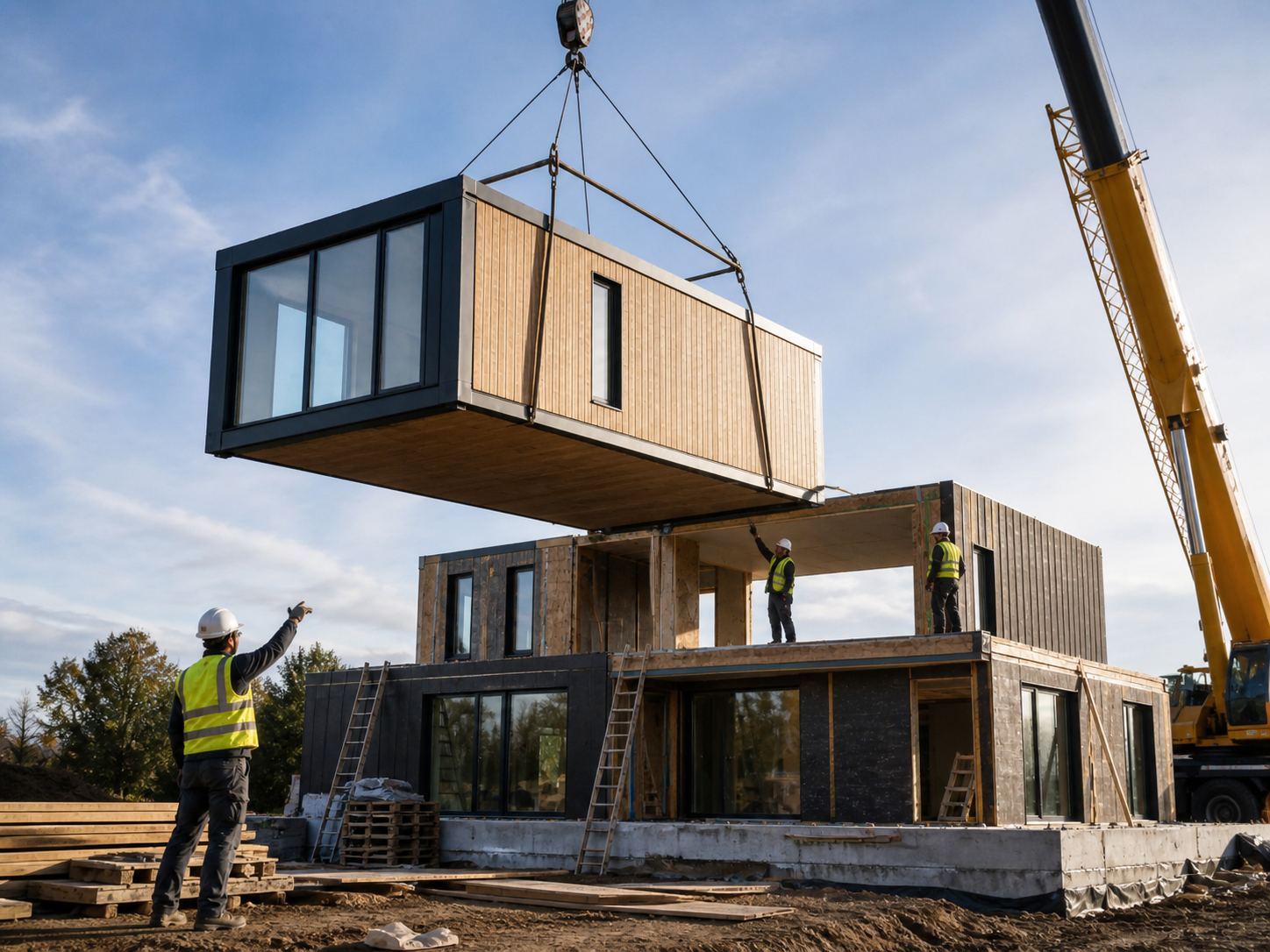
Modular construction is a more complete form of prefabrication. Instead of producing only individual elements, such as walls or panels, entire units — known as modules — are manufactured. These modules may include floors, walls, electrical and plumbing installations, and even interior finishes.
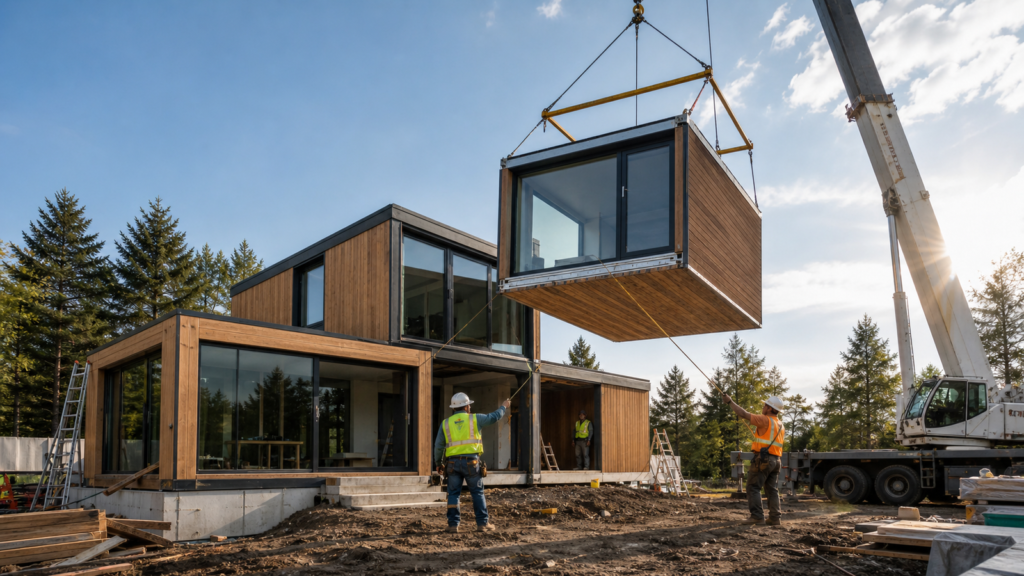
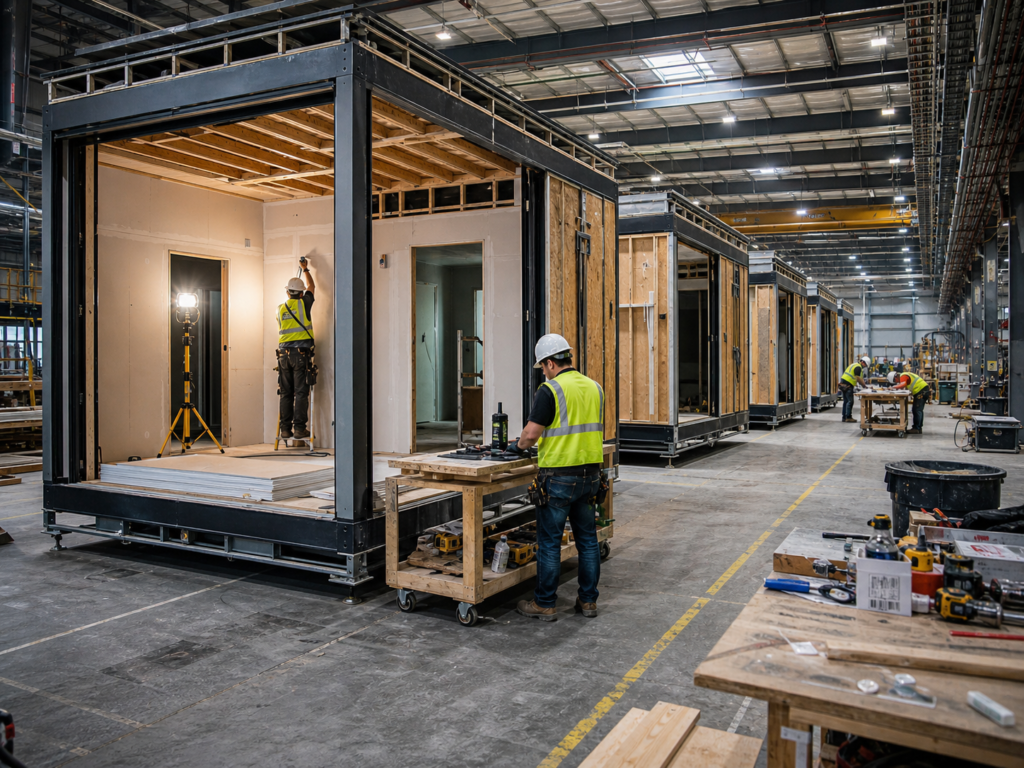
In simple terms, in traditional construction, most of the work takes place on site. In prefab and modular construction, a significant part of the work is completed earlier, in an organised production facility. The international discussion around modular construction is based precisely on this shift: moving part of the building process away from the construction site and toward a more industrialised way of producing buildings. McKinsey has noted that transferring work off site can, under the right conditions, improve productivity and reduce both costs and project timelines.
Why is it being discussed so much today?
Building construction has become more complex. Energy-efficiency requirements are higher, timelines are tighter, and property owners increasingly want greater certainty over cost and delivery dates.
Modular construction promises to address some of these challenges. Because a large part of the project is carried out in a controlled environment, several factors that commonly cause delays on a construction site can be reduced. These include weather conditions, poor coordination between crews, and unexpected issues during implementation.
At the same time, the need for more housing across Europe has brought fast and standardised construction methods into sharper focus. Studies and European analyses on offsite construction often associate this approach with faster housing delivery, better quality control, and the potential to reduce construction waste. However, this does not mean that modular construction is an automatic solution for every market or every project.
The main advantages of modular construction
The first advantage usually mentioned is speed. And indeed, when the design is well planned and the process is properly organised, a modular project can be completed faster than a comparable traditional build.
But speed is not the only factor. Another important advantage is better control over production. In a factory or organised prefabrication facility, materials are better protected, processes are repeated with greater precision, and quality control can be more systematic.
Another benefit is the reduction of disruption on site. Since a large part of the work has already been completed before the elements arrive at the plot, the time spent by crews on site can be shorter. This is particularly important in areas with difficult access, in tourist zones, on plots with limited space, or in projects that need to be completed within a specific timeframe.
There is also an environmental dimension. Production in a controlled environment can help reduce material waste and make it easier to standardise solutions with improved energy performance. The building sector is globally linked to a significant carbon footprint, which is why discussions around materials, lifecycle impact, and embodied carbon have become increasingly important.
Is it always a more affordable solution?
This is where a more realistic view is needed. Prefab and modular construction are often promoted as more cost-effective alternatives to traditional building methods. In some cases, they can be. However, lower cost should not be taken for granted.
The final budget depends on a range of factors, including the size of the project, the level of standardisation, transportation costs, access to the plot, foundation requirements, permits, finishes, mechanical and electrical installations, and the conditions of the local labour market.
Modular construction usually delivers the greatest value when the project is well planned from the start, specifications are clearly defined, and there is a degree of repetition in the design. When changes are made throughout the process, when the plot presents complex challenges, or when the project is highly customised, the potential cost advantage can become more limited.
It is also important to remember that the modular construction market is not the same everywhere. Some companies and analysts emphasise its potential for savings, while others point out that factory production, transportation, and the operational costs of maintaining a specialised manufacturing facility can make the final price less affordable than it may first appear.
Where does prefab and modular construction fit best?
Modular construction can be particularly interesting in projects where time, repetition, and organisation play a central role.
It can be suitable, for example, for holiday homes, small residential complexes, guesthouses, student housing, commercial spaces, auxiliary buildings, site offices, or homes with relatively clear and simple geometry.
It can also be useful in areas where traditional construction is difficult due to access limitations or restricted working periods. On an island, for example, reducing the amount of time crews need to remain on site can have real practical value.
On the other hand, modular construction is not always the best option for every architecturally complex project, for plots with steep slopes, or for cases where the property owner wants continuous changes during the construction process. The modular approach works best when decisions are made early and implemented consistently.
Conclusion
Fast construction can be a valuable advantage, as long as it is supported by careful planning, technical expertise, and a realistic budget. A prefab or modular building should not be viewed as an “easy shortcut”, but as a different construction method that requires thoughtful design, precise coordination, and informed decision-making.
For property owners looking to build or invest in real estate, the right choice begins with a clear understanding of the project. Before selecting a construction system, it is essential to assess the plot, define the project’s needs, evaluate the technical requirements, and understand the full cost from the beginning.
Modular construction certainly has a place in the future of building. Whether it has a place in your own project depends on your goals, your plot, your budget, and the way the construction process is planned and organised from day one.