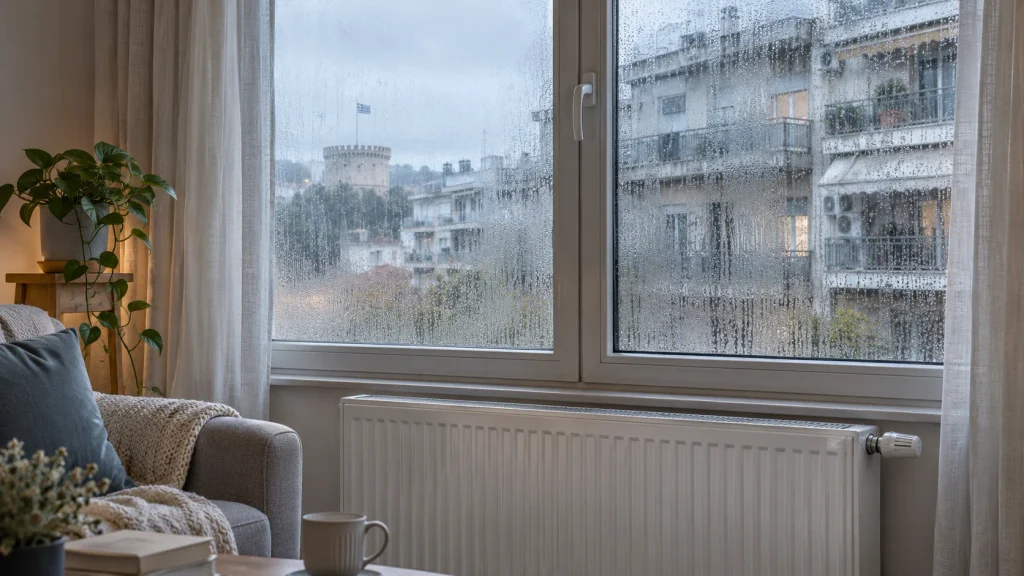
As temperatures drop and the heating gets turned on, a familiar, unwelcome phenomenon makes its appearance in thousands of homes: water droplets pooling on windowpanes in the morning, a heavy, stuffy atmosphere in the rooms, and eventually, unsightly black stains creeping into wall corners and across ceilings.
Dampness and mold are not merely cosmetic issues that can be fixed with a quick wipe of bleach and a fresh coat of paint in the spring. They are symptoms of a deeper building malfunction. As construction and renovation professionals, we see every day how misdiagnosis leads to wasted money and recurring frustration.
In this guide, we will break down in simple terms why your home “sweats” in the winter, which daily habits worsen the situation, and what truly permanent, technical solutions can shield your property for decades.
Why Dampness and Mold Are More Than Just an Aesthetic Issue
Before looking at the causes, it is worth understanding what is actually happening inside your living space. Ideal relative humidity levels inside a home range between 45% and 55%. When this percentage consistently exceeds 65–70%, it creates the perfect microclimate for fungal growth—what we commonly call mold.
The consequences extend across three main areas:
- Your Health: Mold fungi release microscopic spores into the air. Inhaling them is directly linked to allergies, chronic coughing, eye irritation, asthma flare-ups, and respiratory problems, especially in children and the elderly.
- Your Household Budget: Damp air is much harder to heat than dry air. A humid home requires up to 20–30% more energy to reach the desired temperature, while constantly feeling chilly even when the thermostat reads 21°C (70°F).
- Your Property Value: Chronic moisture causes plaster to bubble and peel, rots wooden elements, and, in severe cases, corrodes the steel reinforcement inside the concrete, compromising the structural integrity of the building.
The 3 Usual Suspects: How to Identify Where the Moisture Comes From
In construction practice, the right treatment always starts with the right diagnosis. Not all dampness is created equal. Depending on where the problem appears, we can pinpoint its source.
1. Internal Condensation (Water Vapor)
This is the most common form of moisture during winter. A family of four produces 8 to 12 liters of water daily in the form of vapor (through breathing, cooking, showering, and drying clothes). When this warm, moist air hits a freezing surface—such as an uninsulated north-facing concrete beam or an old window frame—it turns back into liquid water.
- How to spot it: It appears as speckled black mold high up in the corners of rooms, on ceilings, around windows, and behind large furniture (like wardrobes) placed flush against exterior walls.
2. Penetrating Damp (From the Outside In)
Here, water finds a pathway from the outside environment into the interior of the home. It is caused by worn-out roof waterproofing, cracks in exterior plaster, damaged gutters, or even internal plumbing leaks.
- How to spot it: It creates distinct patches with yellowish or brown rings, causes paint and plaster to blister, and noticeably worsens after heavy rainfall.
3. Rising Damp (From the Ground)
This exclusively affects ground floors and basements. Groundwater “climbs” up through the microscopic pores of building materials (capillary action) because the foundation waterproofing is either missing or damaged.
- How to spot it: It appears low on the walls (from 30 cm up to 1.5 meters above the floor), causes plaster to crumble and flake off, and leaves behind white, fluffy salt deposits (efflorescence).


6 Smart Daily Habits for Prevention
If your issue stems from internal condensation, changing a few daily routines can drastically reduce the phenomenon at zero cost:
- Ventilate briefly and effectively: In winter, avoid leaving windows tilted open for hours, as this chills the surrounding walls. Instead, open windows wide on opposite sides of the house (to create a cross-breeze) for 5 to 10 minutes twice a day. This replaces the humid air without giving the walls and structural elements time to cool down.
- Stop drying clothes indoors: A single drying rack of wet laundry releases about 2 liters of water directly into your living room air. If you don’t have a tumble dryer or a covered outdoor space, place the rack in a closed room with a dehumidifier running.
- Contain steam at the source: Always keep the bathroom door closed while showering and open the window or turn on the exhaust fan immediately afterward. In the kitchen, turn on the range hood as soon as you start cooking and keep lids on your pots.
- Give your furniture room to breathe: Avoid pushing wardrobes, bookshelves, and sofas right up against exterior (especially north-facing) walls. Leave a gap of 5 to 10 centimeters so air can circulate and moisture doesn’t get trapped behind them.
- Maintain a steady temperature: Turning the heating completely off while you are away and cranking it up high at night encourages condensation. It is much better (and more energy-efficient) to maintain a steady ambient temperature around 19–20°C.
- Use a dehumidifier wisely: A dehumidifier is an excellent ally, provided it is set to 50–55% humidity and has the right capacity for your square footage. Keep in mind, however, that a dehumidifier only manages the symptom (excess airborne vapor)—it does not cure the root cause (freezing or cracked walls).


Permanent Technical Solutions: Fixing the Problem at Its Root
When prevention isn’t enough or when the building has structural vulnerabilities, half-measures like standard anti-mold sprays only offer temporary relief. Eliminating dampness and mold for good requires targeted technical interventions.
1. External Thermal Insulation (ETICS) – The Ultimate Fix for Thermal Bridges
Why does mold always form in the corner of the ceiling? Because reinforced concrete (columns and beams) conducts cold much faster than brick. These vulnerable spots are called thermal bridges. An External Thermal Insulation Composite System (ETICS) wraps the entire building envelope in insulating boards (such as graphite polystyrene or stone wool) finished with water-repellent plaster.
- The result: Interior walls stay warm throughout the winter, water vapor finds no cold surfaces to condense on, mold disappears permanently, and you save up to 40–50% on heating costs.

2. Modern Roof Waterproofing and Insulation
For top-floor apartments and detached houses, the flat roof is the most vulnerable spot. A modern intervention combines both waterproofing (using polyurethane liquid membranes, elastomeric bitumen sheets, or TPO membranes to block rainwater) and thermal insulation (so the ceiling slab doesn’t freeze in winter or overheat in summer).

3. Replacing Window Frames (With Proper Ventilation)
Old aluminum or wooden frames without thermal breaks “sweat” nonstop in the winter. Replacing them with modern energy-efficient frames (featuring thermal breaks and double or triple low-emissivity glazing) stops condensation on the glass. A word of caution: Because new windows seal airtight, the house no longer “breathes” passively like it used to. This requires either consistent manual airing or installing decentralized mechanical ventilation units with heat recovery.

4. Treating Rising Damp in Ground Floors
Standard paints and plasters fail within months when applied over rising damp. A permanent solution requires stripping away the damaged plaster, creating a chemical damp-proof course at the base of the wall (by injecting specialized resins or silanes that block capillary pores), and applying a breathable, macroporous restoration plaster that allows trapped moisture to evaporate without blistering the surface.

5. Crack Repair and Elastomeric Coatings
Even a hairline crack on an exterior wall is enough for rainwater to soak into the brickwork. Proper restoration involves opening up the cracks, sealing them with flexible polyurethane mastics, and painting the exterior with 100% acrylic or elastomeric waterproof coatings. These coatings allow the wall to breathe from the inside out while completely blocking water from penetrating from the outside in.

Your Home Deserves a Permanent Solution
Tackling dampness is not just an expense; it is one of the most rewarding investments you can make for your family’s health and the longevity of your property. Furthermore, most of these upgrades—such as external thermal insulation, roof waterproofing, and window replacement—frequently qualify for state energy-efficiency subsidies and green renovation grants.
If you notice signs of dampness or mold in your space and aren’t sure where the problem originates, avoid rushing into superficial patchwork. Our experienced team of engineers and technicians is at your disposal for a comprehensive on-site inspection (using thermal imaging cameras and professional moisture meters) to pinpoint the exact cause and recommend the most cost-effective, permanent solution.