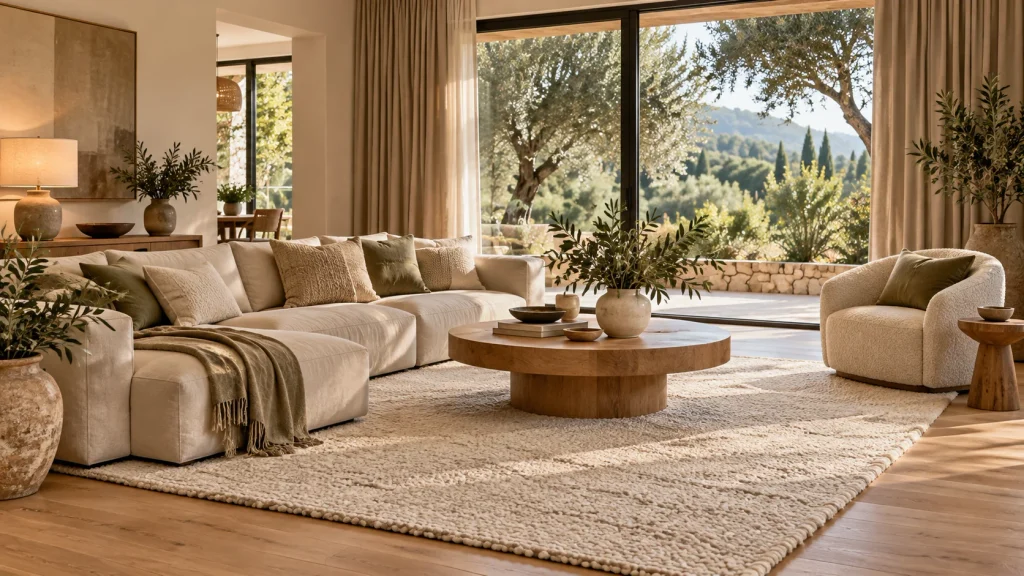
When designing or renovating a home, our first instinct regarding thermal comfort is usually directed toward heating systems, exterior wall insulation, and high-performance energy-efficient window frames. These form the structural envelope of a building—the backbone of any modern construction. However, true thermal comfort inside a home is completed from within. The materials we select for our floors, the rugs we lay down, and the textiles dressing each room play a decisive role both in mitigating heat loss and in elevating the perceived room temperature.
A space with flawless wall insulation, yet stripped down to bare, cold floors and uncovered large windows, can feel chilly even when the thermostat reads 21°C. Conversely, the strategic synergy of flooring materials, layered textiles, and soft interior finishes acts as an effective secondary, interior thermal shield, noticeably reducing operating heating expenses.
1. Flooring Materials: The Foundation of Thermal Comfort
The floor represents the largest continuous surface in a home with which we maintain direct physical contact. The thermal conductivity and heat capacity of each chosen material determine how quickly heat is drawn away from or radiated back to our feet.
Natural Hardwood Flooring
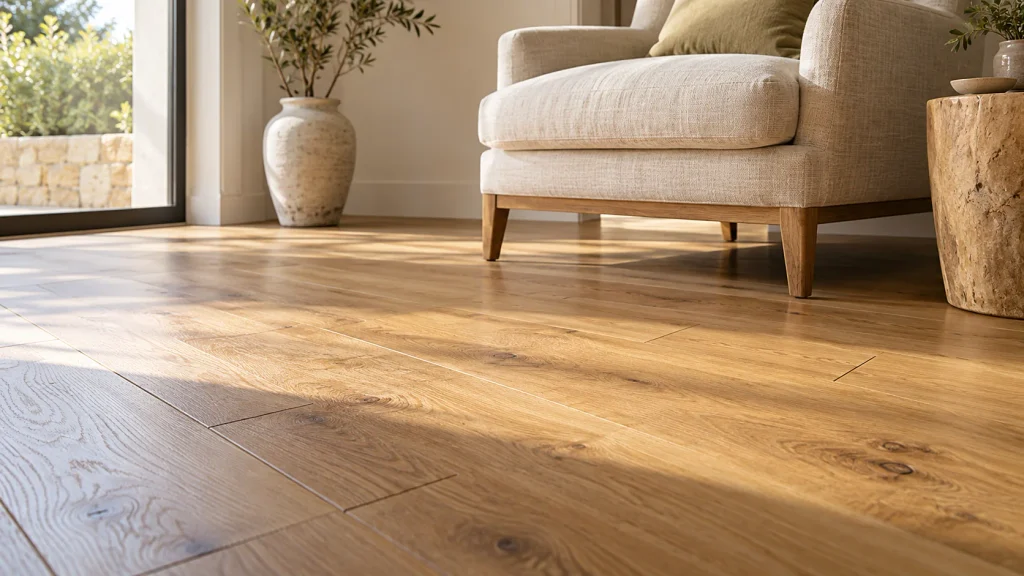
Solid or engineered hardwood remains the gold standard for thermal comfort underfoot:
- A Natural Insulator: Wood consists of microscopic, air-filled cell structures, granting it an inherently low thermal conductivity coefficient. It does not actively pull heat away from bare soles, maintaining a consistently pleasant surface temperature year-round.
- Compatibility with Underfloor Heating: For homes equipped with radiant underfloor heating, engineered wood of moderate thickness (10–14 mm) is the ideal choice. It offers superior dimensional stability against seasonal expansion and contraction while facilitating smooth, uniform heat distribution.
Cork: The Overlooked Contender
Cork continues to gain significant traction in modern sustainable and bioclimatic architecture:

- Composed of approximately 50% air trapped within tiny honeycomb-like cells, cork serves as an outstanding natural thermal and acoustic barrier.
- Soft underfoot, anti-static, and naturally hypoallergenic, it delivers an instant sensation of warmth—making it an exceptional selection for bedrooms, nurseries, and home offices.
Ceramic Tiles, Marble, and Natural Stone: The Thermal Mass Strategy
Ceramic tiles and natural stones exhibit high thermal conductivity, which makes them feel cool to the touch during winter when unheated. However, they hold a distinct thermodynamic advantage:
- High Thermal Mass: They store substantial amounts of thermal energy and release it gradually back into the room.
- They are the premier choice installed over underfloor radiant heating, maximizing heating efficiency without thermal resistance. Similarly, placed in areas washed by low winter sunlight through south-facing glass, they act as passive thermal storage elements.
2. Rugs: Insulation, Texture, and Spatial Warmth
Rugs do not merely introduce color and character to interior design; they function as genuine insulating equipment. Energy-efficiency assessments indicate that an appropriately carpeted or rug-covered floor can retain 10% to 12% more ambient heat within a room.
| Rug Material Type | Thermal Insulation Capacity | Durability & Wear Resistance | Best Application |
| Natural Wool | Exceptionally High | Very High | Living room, dining room, master bedroom |
| Jute / Sisal (Natural Fibers) | Moderate to High | High | Everyday living areas, hallways (ideal base layer) |
| Polyester / Microfiber | High (especially in high-pile/shag) | Moderate | Guest rooms, secondary bedrooms |
| Polypropylene | Moderate | Outstanding | High-traffic zones, utility areas, kitchens |
The Wool Rug as an Insulation Benchmark
Wool possesses an inherent, crimped fiber architecture that traps millions of microscopic air pockets. This forms an effective physical barrier between a cold subfloor and the warmed indoor air above. Furthermore, wool naturally balances room humidity by absorbing excess moisture without feeling damp to the touch, reinforcing a cozy, balanced microclimate.



The Underlay Secret
A common misstep is overlooking the underlay, prioritizing only the aesthetic pile above. Adding a dense underlay made of compressed felt, sponge rubber, or recycled acoustic foam (6–10 mm thick):
- Doubles the rug’s effective thermal resistance (R-value).
- Protects the woven fibers from ground friction, substantially extending the lifespan of the rug.
- Imparts an elevated, plush feeling underfoot.
The Art of Layering
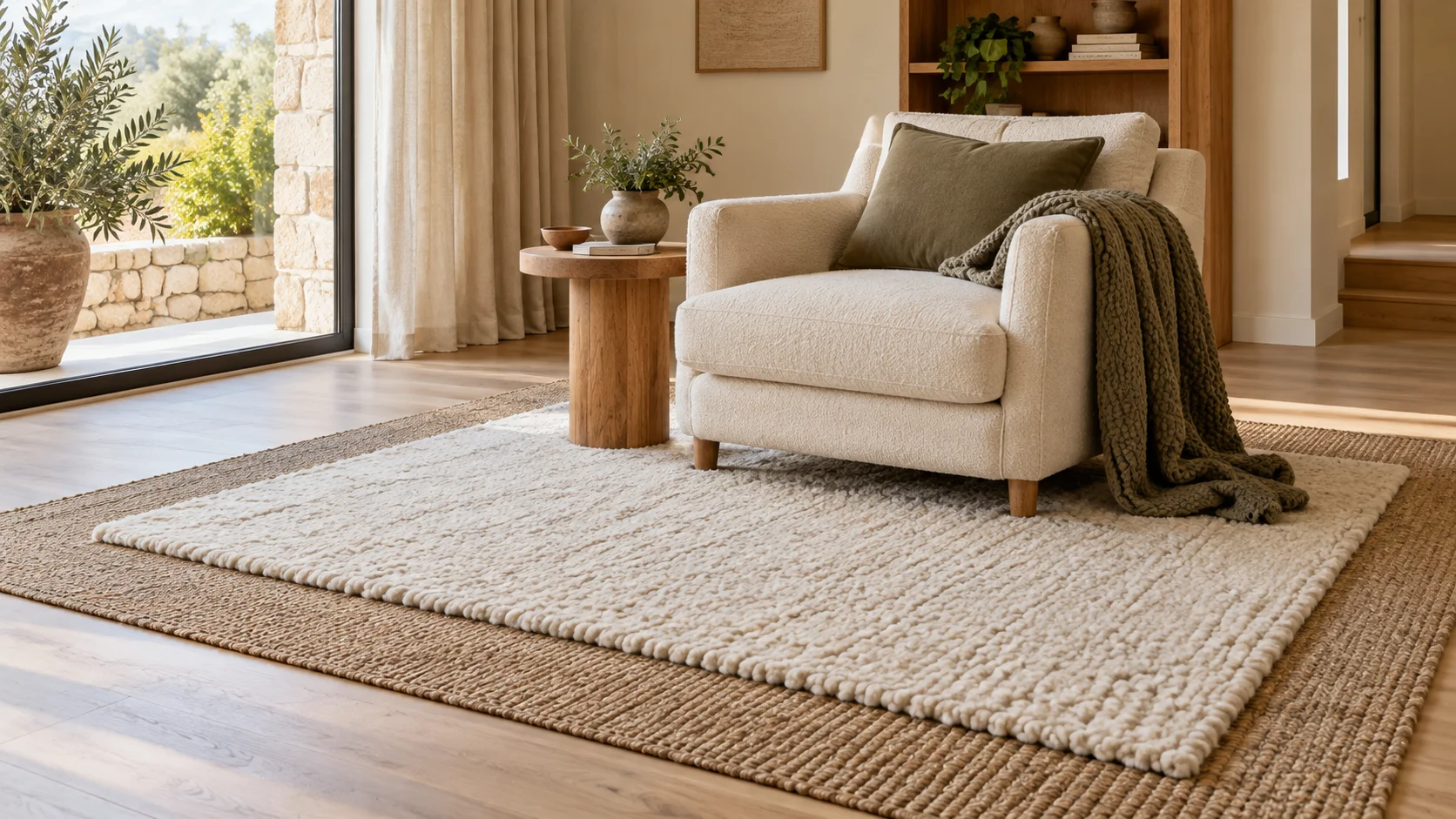
Placing a plush, high-pile wool rug over a larger, flat-woven foundational rug (such as sisal or jute) does more than create textural depth. It establishes multiple insulating layers precisely where foot traffic and seated activities are concentrated.
3. Interior Textiles: A Shield Against Drafts and Convection Currents
Textiles throughout an interior operate much like quality winter apparel: they create pockets of still, trapped air that prevent convective heat transfer toward cold peripheral surfaces.
Heavy Thermal Drapes: Defending Window Openings
Even cutting-edge, double- or triple-glazed windows exhibit lower thermal resistance than a well-insulated exterior wall. At night, window glazing cools down, cooling the adjacent air. This chilled air drops toward the floor, inducing uncomfortable convection drafts.
- Fabrics: Velvet, heavy wool blends, tweed, and dense chenille offer superior resistance.
- Thermal or Blackout Linings: Always opt for curtains backed by a dense thermal lining. The multi-layered composite traps cold air inside the pocket between the glass and the curtain drop.
- Proper Installation: Mount curtain tracks as close to the ceiling as possible and allow the fabric to gently pool or brush the floor, generously overlapping the sides of the window reveal to seal off perimeter airflow.

Upholstery and Wall Hangings
- Furniture Upholstery: Swap cold leather or slick synthetic fabrics for tactile, heat-retaining materials such as bouclé, corduroy, velvet, and woven wool on sofas and accent chairs.
- Upholstered Headboards and Panels: Installing a fabric-upholstered headboard against an exterior-facing bedroom wall introduces a buffer between your bed and cold masonry, immediately improving sleep quality.
4. Practical Room-by-Room Guide
To optimize both energy efficiency and physical comfort, apply tailored interior interventions based on the functional demands of each living space:
- Living Room:
- Lay down a large wool rug generous enough to anchor all primary seating (with at least the front legs of sofas and armchairs resting firmly on it).
- Utilize double drapery: a sheer inner layer to harvest passive solar warmth during sunny daytime hours, paired with a heavy lined curtain drawn shut at dusk.
- Incorporate substantial throws made of merino wool, cashmere, or dense fleece knits.
- Bedrooms:
- Position runners or area rugs around the perimeter of the bed so the first step out of bed lands on a warm, soft surface.
- Switch to flannel or high-thread-count brushed cotton bed linens paired with an all-season down duvet.
- Hallways and Entryways:
- Corridors frequently act as cold air funnels. Long runners made of tight-weave sisal or thick wool, paired with a non-slip insulating pad, immediately arrest drafts moving across bare transition zones.


Investing in Holistic Comfort
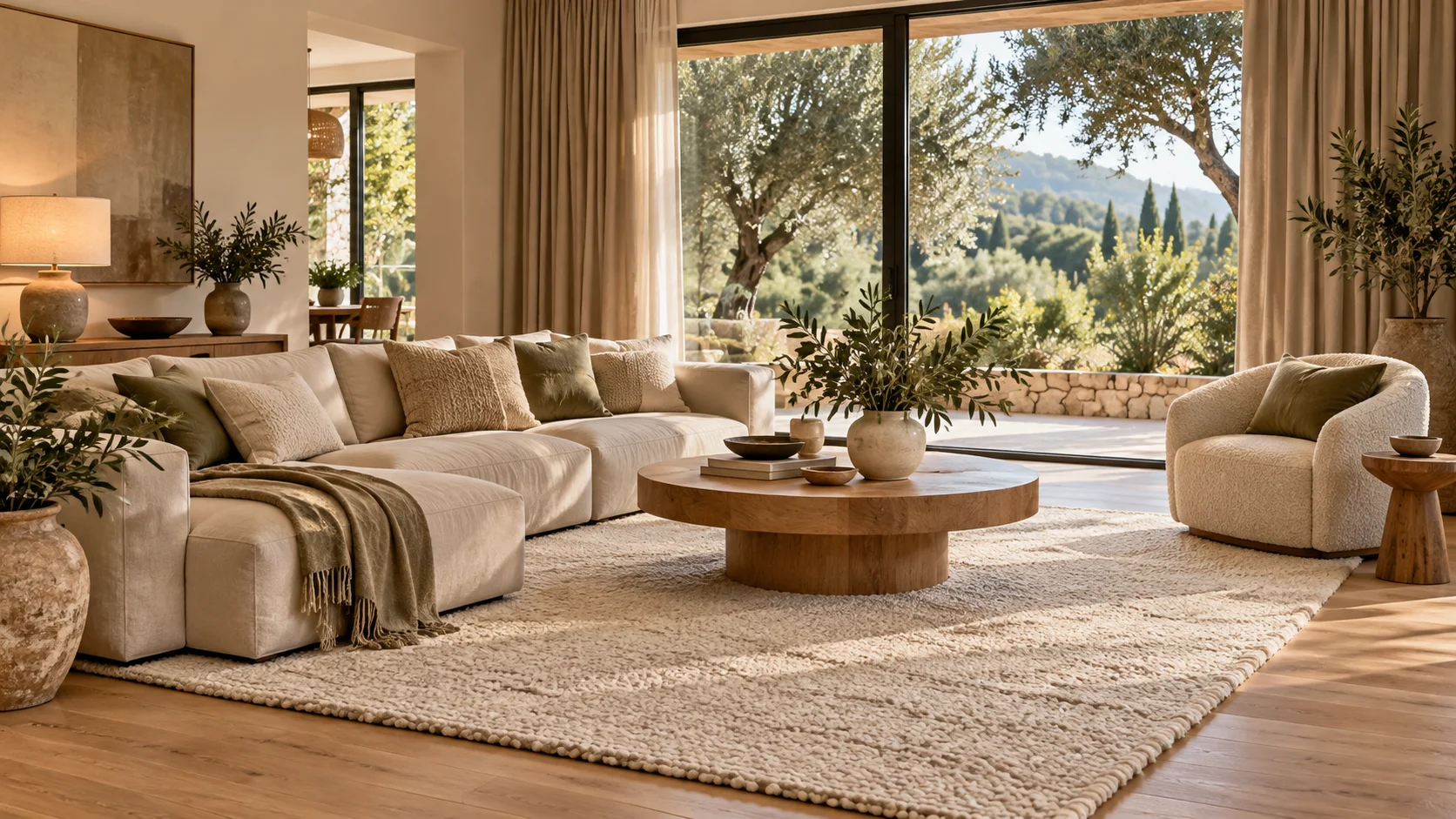
Structural energy retrofits and architectural integrity are fundamental prerequisites for an efficient, resilient home. Yet genuine comfort remains multi-sensory. By complementing robust structural engineering with warm flooring materials, dense natural rugs, and layered textiles, you do not merely build an energy-conscious house—you create a truly warm, welcoming sanctuary.
Are you planning the construction or comprehensive renovation of your residence? Our team of civil engineers, architects, and interior specialists is ready to guide you toward tailored material solutions that balance refined aesthetics, long-term durability, and optimal thermal performance.