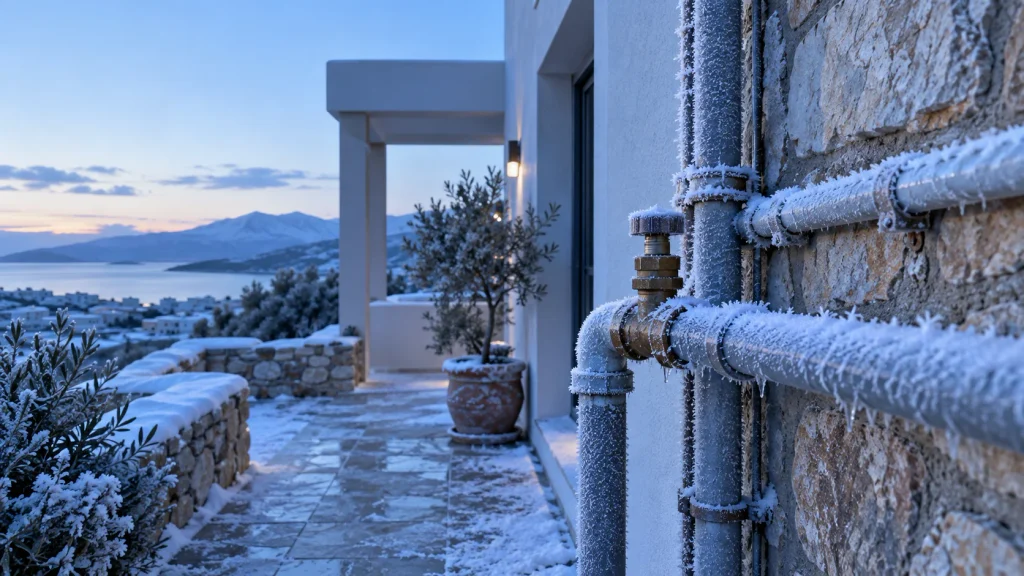
Winters often bring sudden cold snaps and periods of severe freezing temperatures. While most homeowners focus on heating indoor living spaces, there is a critical building component that often remains exposed and overlooked: the plumbing and heating pipe network.
Frozen pipes are not merely a temporary inconvenience resulting in interrupted water supply. They can lead to pipe bursts, extensive water damage to masonry, flooring, and structural elements, as well as exorbitant repair costs.
As a technical construction company, we have compiled a comprehensive guide featuring actionable preventive measures, material specifications, and safe remediation steps to safeguard your home before temperatures plunge below freezing.
Why Do Pipes Burst in Freezing Temperatures? The Physics Behind the Failure
To prevent the problem effectively, one must understand how it occurs. Water is one of the few liquids that expands by approximately 9% when it solidifies (freezing at 0°C / 32°F).
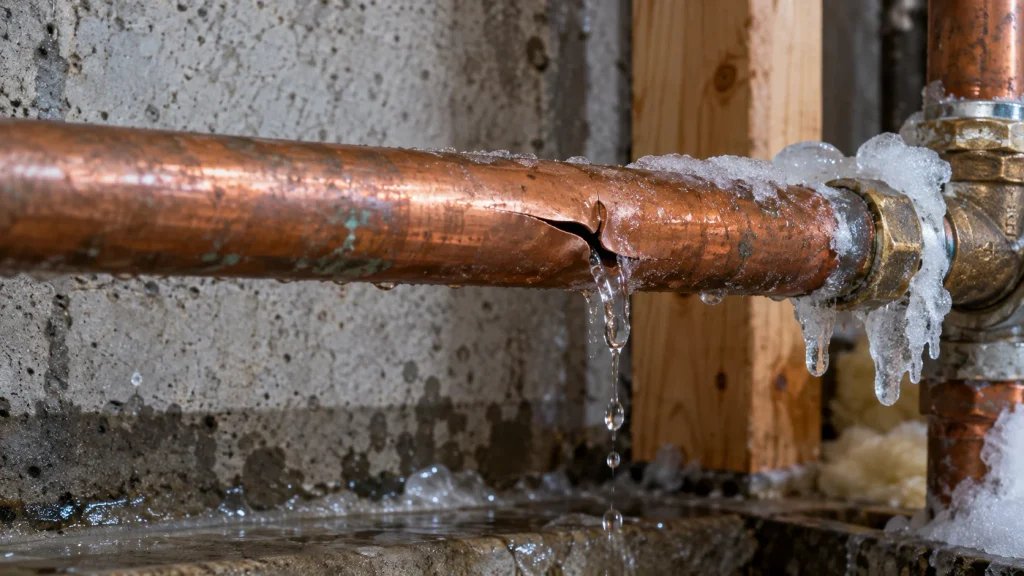
Inside a closed pipe, forming ice takes up more volume. However, contrary to popular belief, a pipe rarely ruptures at the exact spot where the ice blockage forms. As the ice plug expands, it acts like a piston, trapping water between itself and a closed faucet or fitting. This causes hydrostatic pressure downstream to spike dramatically (frequently exceeding 250–300 bar), resulting in catastrophic pipe rupture at the weakest point along the line.
The Most Vulnerable Areas in a Building
Not all pipes are equally at risk. Our field experience in renovations and structural remediation shows that failures concentrate in specific zones:
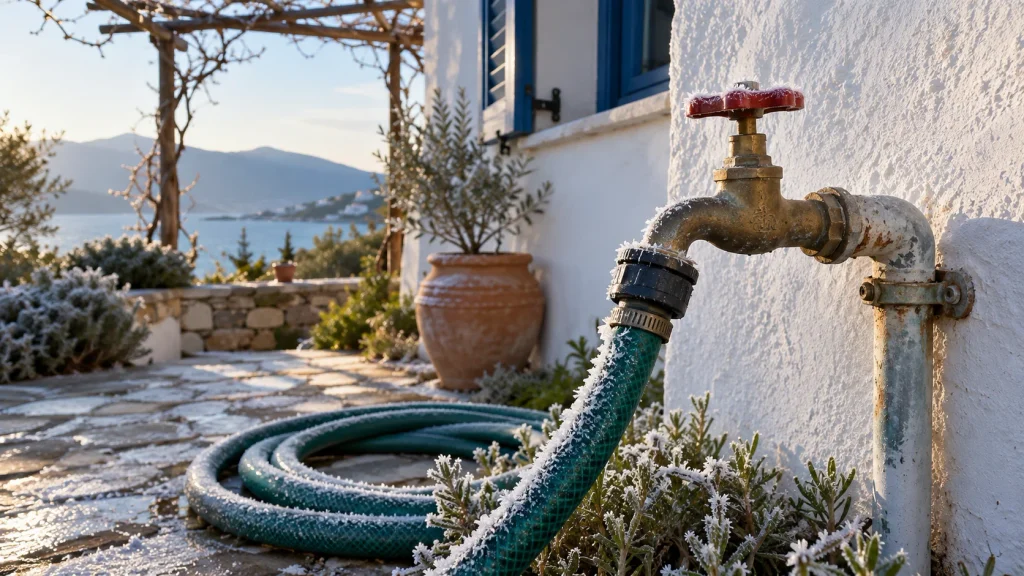
- Outdoor faucets and garden/balcony piping: Directly exposed to ambient freezing air and wind chill.
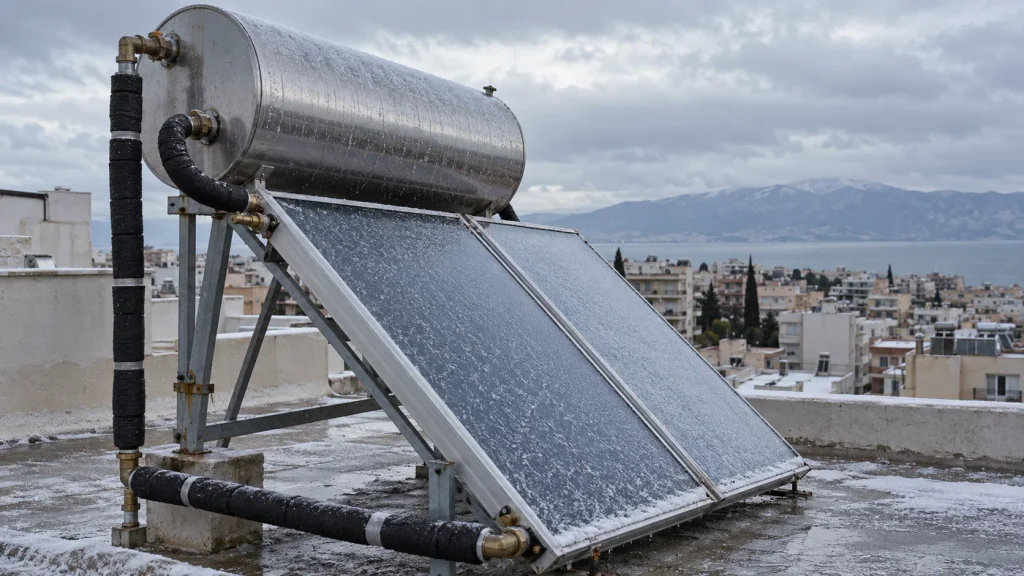
- Solar water heaters and rooftop installations: Supply and return lines on exposed rooftops endure severe northerly winds.
- Unheated indoor spaces: Basements, attics, crawl spaces, garages, storage units, and mechanical boiler rooms.
- Piping within exterior wall cavities: Particularly in older buildings lacking external thermal insulation (ETICS/thermal cladding).
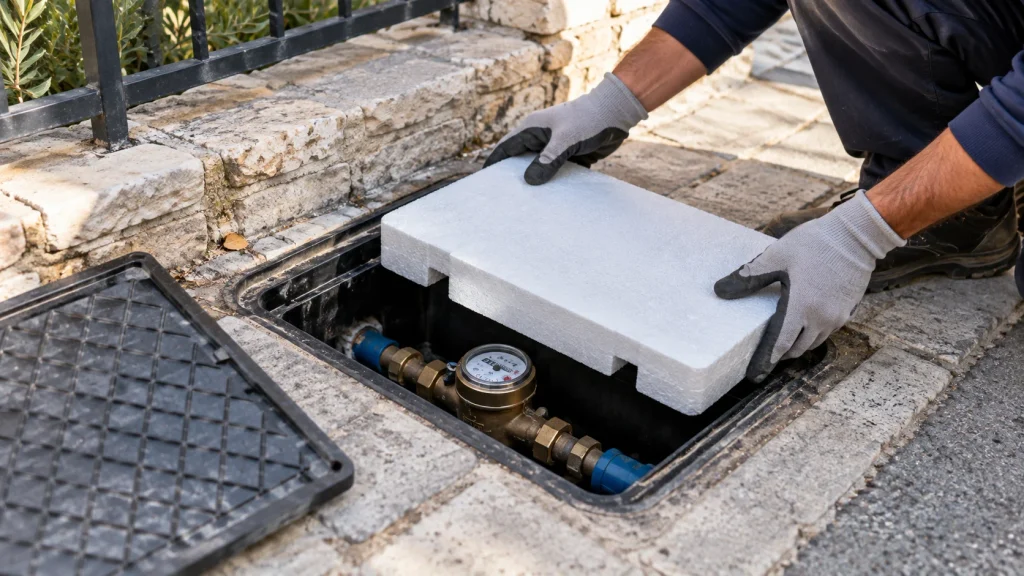
- Water meter pits: Below-grade or sidewalk pits that lack proper insulation can freeze rapidly, damaging the utility meter.
Essential Preventive Measures Before Winter
Preventative maintenance is always far more cost-effective and less intrusive than emergency repairs. Implement these protective measures ahead of the cold season:
1. High-Grade Thermal Insulation for Exposed Pipes
Any piping traversing exterior spaces or unconditioned interior zones must be clad in quality insulation:
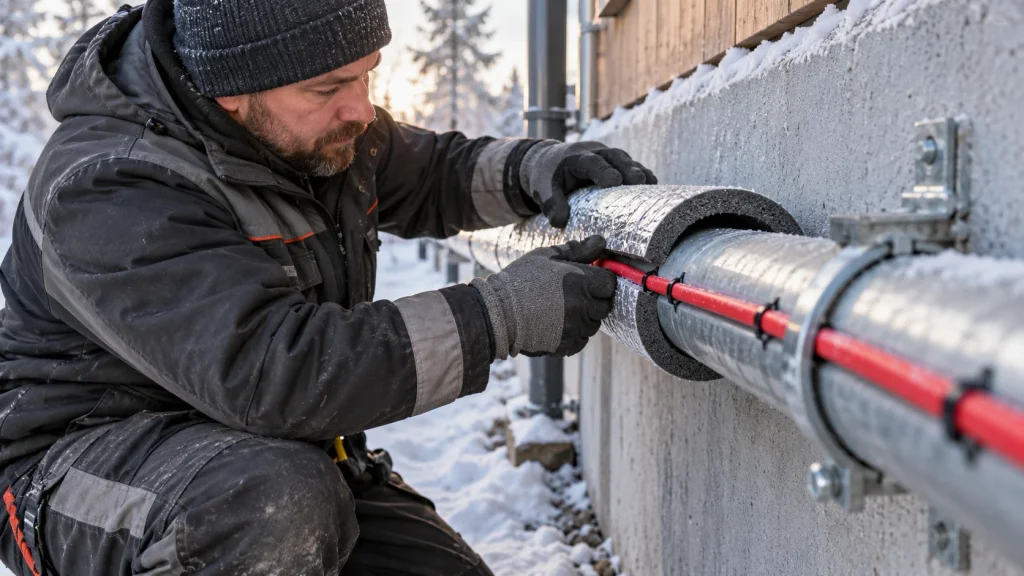
- Closed-cell elastomeric foam (e.g., Armaflex / Aeroflex): Flexible pipe insulation sleeves offering superior vapor resistance and thermal performance.
- UV protection: Rooftop insulation degrades rapidly under sun exposure. Ensure sleeves are fitted with an aluminum jacket or heavy-duty UV-resistant wrapping tape.
- Insulation wall thickness: For outdoor lines in regions subject to regular freezing, insulation wall thickness should be no less than 13 mm to 19 mm.
2. Draining Outdoor Systems (Drain-Down)
Before the onset of severe cold:
- Shut off the dedicated indoor isolation valve feeding outdoor hose bibbs and balcony taps.
- Open outdoor faucets fully to drain trapped water completely, leaving them cracked open slightly.
- Disconnect, drain, and store all garden hoses. A connected garden hose holds water against the sillcock, significantly increasing the likelihood of an internal wall pipe burst.
3. Solar Water Heater Maintenance
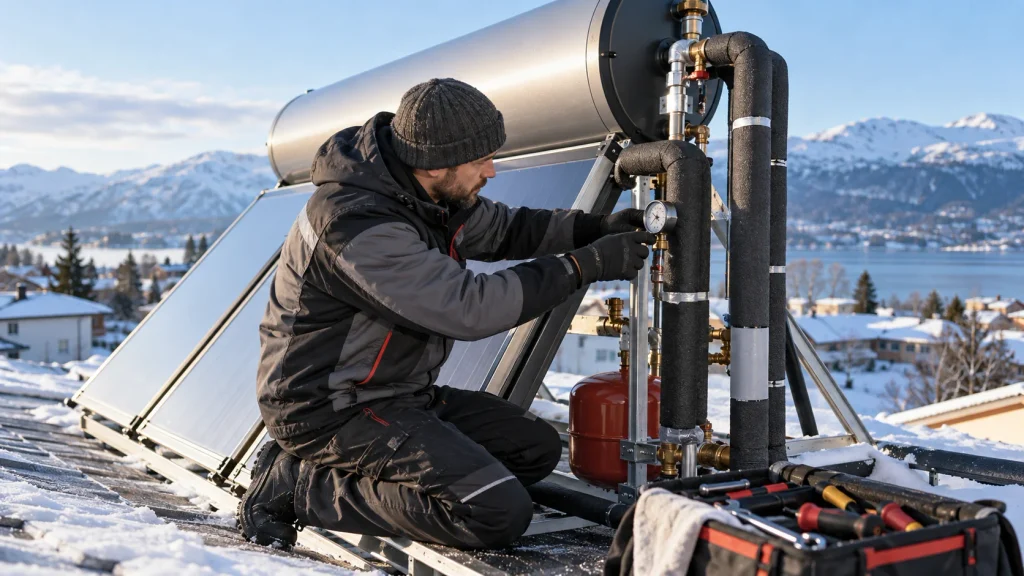
- Inspect the heat-transfer fluid (glycol antifreeze) in the closed loop. Over time, antifreeze degrades or dilutes, leaving solar collector panels vulnerable to freezing and splitting.
- Verify the condition of thermal insulation on all supply and return lines connecting to the storage tank.
4. Water Meter Pit Protection
Insulate the inside of the water meter pit using extruded polystyrene boards (XPS) or a custom thermal insulated blanket. Avoid materials that absorb moisture (such as old fabrics, rags, or unprotected fiberglass), as wet insulation conducts cold and acts as a freezing pack around the meter.
What to Do During an Extreme Cold Wave
When meteorological services forecast temperatures dropping below -2°C to -3°C (26°F to 28°F) for extended durations:
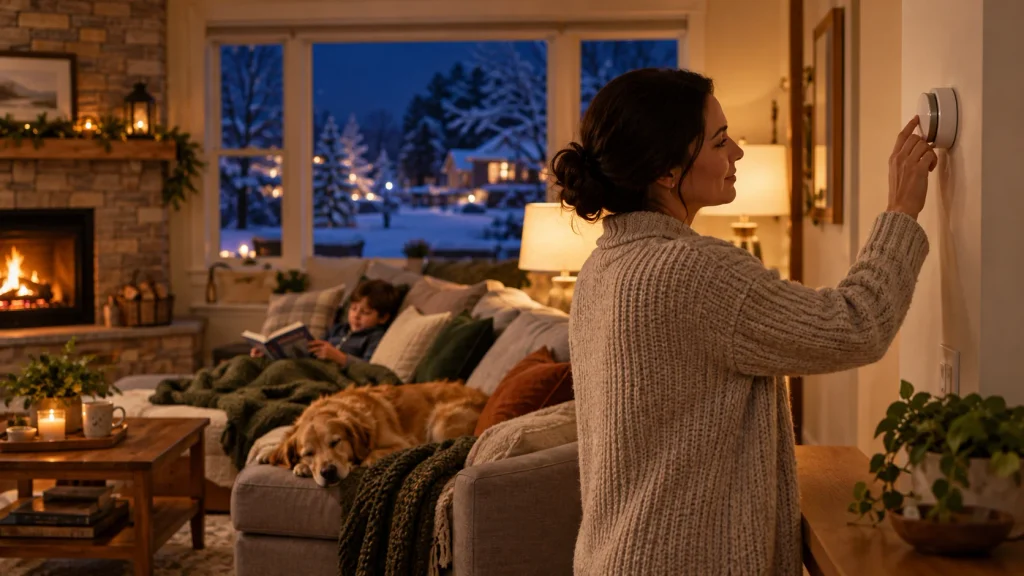
- Maintain a baseline indoor temperature: Avoid shutting off heating entirely overnight or while away. Set the thermostat to at least 15°C–16°C (59°F–61°F). Maintaining residual heat within the building fabric prevents concealed wall pipes from freezing.
- Let a faucet drip: Flowing water resists freezing and continuously relieves internal hydrostatic pressure. A slight, steady trickle from an indoor faucet (ideally the fixture furthest from the main water supply shut-off) is sufficient.
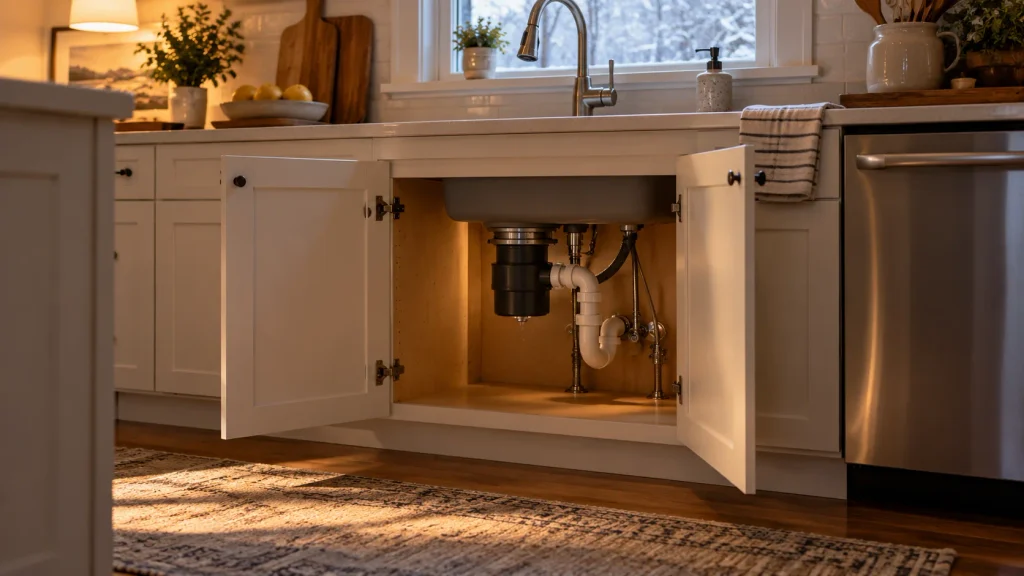
- Open vanity and kitchen cabinet doors: If sink plumbing runs along an uninsulated exterior wall, keep cabinet doors open to allow ambient warm room air to circulate around the supply lines.
Pipe Materials: Performance and Freeze Resistance
The choice of piping material plays a pivotal role in overall installation resilience:
| Piping Material | Elasticity / Freeze Resistance | Risk of Bursting | Engineering Assessment |
| Copper | Very Low | High | Rigid metal. Splits easily when internal water expands into ice. Demands rigorous insulation. |
| Galvanized Steel | None | Very High | Common in aging infrastructure. Frequently fails at threaded connections and seams. |
| Polypropylene (PPR) | Moderate | Moderate | Offers limited thermal expansion tolerance, but turns brittle under extreme cold. |
| Cross-Linked Polyethylene (PEX) | Very High | Low | Highly elastic; can expand under ice pressure and recover without structural rupture. Standard modern construction choice. |
| Multilayer Composite (PEX-AL-PEX) | Good | Low / Moderate | Combines aluminum structural rigidity with plastic durability. Requires proper exterior insulation. |
How to Safely Thaw a Frozen Pipe
If you open a tap during freezing weather and only a trickle or no water comes out, your pipework is likely frozen. Proceed methodically:
- Locate your main shut-off valve: Before attempting any thawing, verify where the master water shut-off valve is located. If a pipe has already fractured, water will begin spraying the moment the ice melts.
- Open the connected faucets: Crack open the taps serviced by the frozen line to allow steam and melting water pressure to escape safely.
- Apply gentle, controlled heat:
- Use an electric hair dryer on medium heat, moving it continuously along the pipe length.
- Wrap hot-water-soaked towels around the frozen pipe section.
- Position a portable space heater in the enclosed area (maintaining strict clearance from combustible surfaces).
- Always thaw from the faucet toward the blockage: Begin applying heat closest to the open fixture and work backwards toward the supply source. This ensures meltwater has an unhindered exit route.
Critical Safety Warning: Never use a blowtorch, open flame, propane burner, or heat gun directly on plumbing pipes. The risk of house fire, steam explosion, and permanent pipe degradation is severe.
Permanent Construction Solutions for Long-Term Protection
When undertaking an extensive renovation or planning new building construction, modern technical solutions can eliminate freezing risks entirely:
- Self-Regulating Trace Heating Cables: Specialized electrical heating tapes installed directly along vulnerable exterior pipes beneath the insulation layer. Controlled by thermostats, they activate automatically when temperatures drop below 2°C (35°F), preventing ice formation with minimal power draw.
- Manifold Plumbing Systems (“Home-Run” / Pipe-in-Pipe): Contemporary plumbing utilizes central distribution manifolds supplying continuous runs of flexible PEX tubing housed within protective corrugated conduit. There are no concealed joints beneath floors or in walls, and damaged lines can be pulled and replaced without destructive masonry demolition.
- Frost-Proof Wall Hydrants (Frost-Free Sillcocks): Specialized exterior faucets where the shut-off valve mechanism sits deep inside the warm interior wall envelope, ensuring the exposed outdoor section remains empty of water whenever shut.
- External Thermal Insulation Composite Systems (ETICS): Continuous building envelope insulation maintains interior masonry and perimeter plumbing service chases at stable, above-freezing temperatures year-round.
Protecting your plumbing network takes minimal preparation but shields your property from costly, catastrophic structural damage. Whether you need preventative retrofits or a complete plumbing network redesign using modern construction standards, our engineering team is available to assist with technical evaluations and on-site implementation.