
The Ultimate Guide to Maximum Efficiency and Longevity
Greece, with its abundant sunshine exceeding 250 days a year, offers the ideal environment for harnessing solar energy. Installing a solar water heater is one of the smartest and most efficient investments for any home, providing plenty of hot water and dramatically reducing electricity bills.
However, like any mechanical equipment continuously exposed to weather conditions and handling water under pressure and high temperatures, a solar water heater requires its own care. Many owners tend to forget it on the roof, only remembering its existence when the shower water stops being hot. Neglecting regular maintenance, however, not only reduces the system’s efficiency but can also lead to costly repairs or even its complete destruction.
In this article, our company’s experts explain why maintaining your solar water heater is vital, when it should be done, and what the crucial steps are to ensure its maximum performance.
Why is regular maintenance necessary?
Maintenance is not just a formality, but the guarantee that your investment will perform at its best for many years. The main reasons why it is mandatory are:
- Protection against limescale: Water in most areas of Greece is “hard,” meaning it contains high levels of calcium and magnesium. When heating water, these minerals settle on the inner walls of the boiler and the electrical heating element. Limescale acts as an insulator, which means the sun (or electricity) struggles twice as hard to heat the water.
- Corrosion (Rust) Prevention: Water and oxygen are the biggest enemies of metals. Without proper maintenance, the interior of the tank can rust and eventually puncture, rendering the boiler useless and requiring a complete replacement.
- Saving money: A well-maintained solar water heater heats water much faster, making the most of even winter sunshine. This dramatically reduces the need to switch on the electricity on cloudy days.
- Water hygiene: Cleaning the inner tank of mud, debris, and rust ensures that the water you wash with remains clean and safe.
How often should it be serviced?
The general rule dictates that a solar water heater needs full maintenance every 2 years. However, this interval may be reduced to 1 year if you live in an area with exceptionally hard water (e.g., islands, certain rural areas with boreholes) or if the system operates under continuous and heavy use (e.g., in small hotels or rented rooms).
The ideal time to schedule maintenance is in the autumn, right before the cold sets in. This way, you prepare the system to operate at peak efficiency during the winter, when sunshine is limited and every sunbeam counts. Alternatively, spring is an equally good time to repair any damage caused by a harsh winter.
What does professional maintenance include?
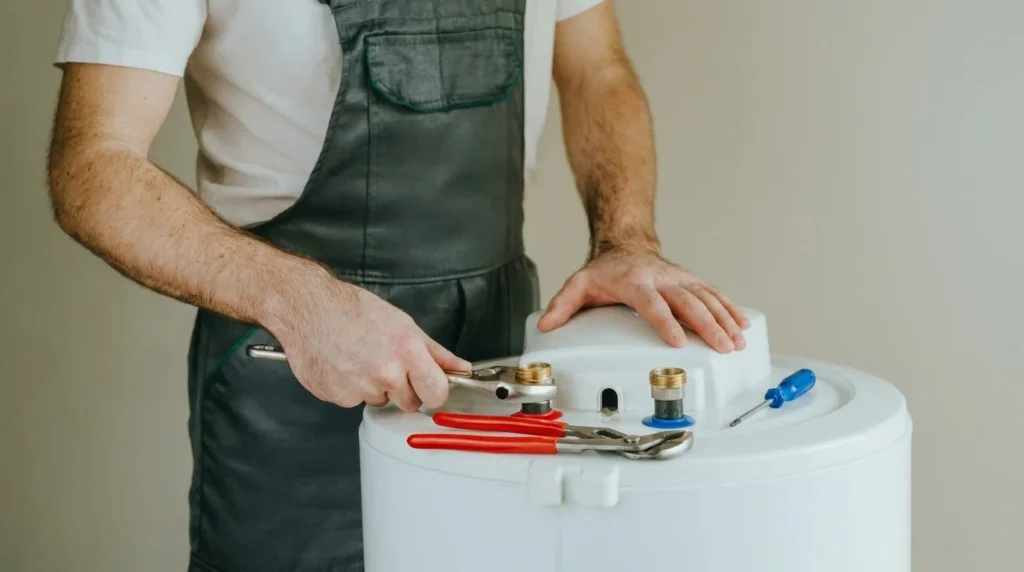
Maintaining a solar system is a specialized job that must be carried out by licensed plumbers. Proper and comprehensive maintenance includes the following critical stages:
1. Replacement of the Magnesium Anode
This is perhaps the most important step. The magnesium anode (or magnesium rod) acts as a “sacrificial” metal. This means that, through an electrochemical process (cathodic protection), the corrosive elements in the water “eat” the magnesium rod instead of attacking your tank’s walls. If the anode is depleted and not replaced in time, the water will begin to corrode the boiler itself, leading to its rapid destruction.
2. Cleaning the Boiler from Limescale
The technician opens the heating element’s flange and drains the tank. Then, they manually remove the accumulated amounts of limescale, mud, and other sediments from the bottom of the boiler. It has been observed that in solar heaters that haven’t been serviced for 4-5 years, up to 1-2 buckets of calcified limescale can be removed!
3. Inspection and Cleaning of the Electrical Heating Element
The heating element, which takes over to heat the water with electricity on cloudy days, is usually covered by a thick layer of limescale. The technician cleans it meticulously or, if the damage is irreversible, suggests replacing it. At the same time, the thermostat is checked for proper operation, which regulates the water temperature and protects against overheating, ensuring your absolute safety.
4. Checking and Refilling Antifreeze Fluid
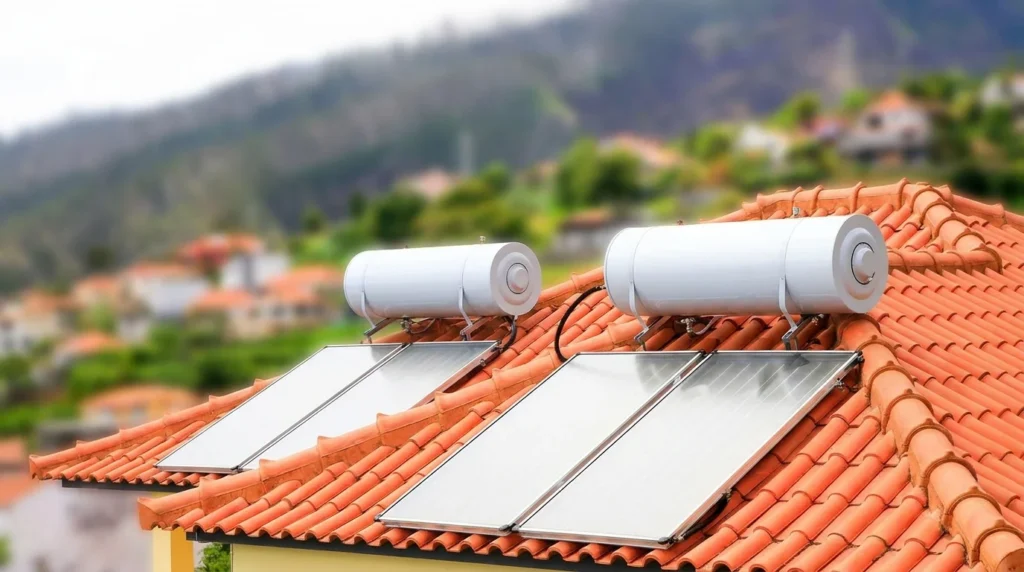
Most modern solar heaters are “closed-loop.” This means the domestic water does not circulate inside the collectors (the panels). A special thermal fluid, mixed with antifreeze (usually propylene glycol), circulates in the collectors. This fluid absorbs heat from the sun, transfers it to the boiler through a heat exchanger (jacket), and heats the water. Over time, this fluid evaporates or loses its properties. The technician measures its density and tops it up, thus protecting the collectors from breaking due to winter frost and improving the heating speed.
5. Replacement of the Sealing Flange
Every time the boiler is opened for maintenance, the rubber sealing flange of the heating element must be replaced with a new one. Reusing the old flange is the number one cause of leaks after a service.
6. Inspection of Insulation and Piping
Extreme temperatures and UV radiation degrade the insulation of the pipes connecting the solar heater to your home’s network. If the insulation is destroyed, the hot water cools down on its way to your taps. The technician must inspect the piping, replace worn insulating materials, and ensure there are no micro-leaks at the joints.
What you can do yourself (DIY)
While the internal service must be done by professionals due to the involvement of electricity and water pressure, there are things you can safely do yourself:
- Cleaning the collectors: Dust, exhaust fumes, pollen, and bird droppings create an opaque layer on the glass of the panels, blocking the sun’s rays. You can wash the glass 2-3 times a year (especially after muddy rainfalls) with plenty of water and a soft sponge. Caution: This task must be done early in the morning or late in the afternoon when the glass is cold, to avoid the risk of it shattering from a sudden temperature change.
- Visual inspection: A quick glance every few months for visible rust, dripping water, or worn insulation will help you catch problems early on.
Conclusion
The solar water heater is a “silent” machine that works tirelessly to make our daily lives more comfortable. The cost of its biennial maintenance is minimal compared to the benefits it offers, but also compared to the expenses that will arise from its premature replacement due to negligence.
Don’t leave your solar heater to chance. Schedule its inspection and maintenance on time and enjoy the maximum performance the Greek sun has to offer!