
The “Invisible” Factor That Determines the Success of Commercial Spaces
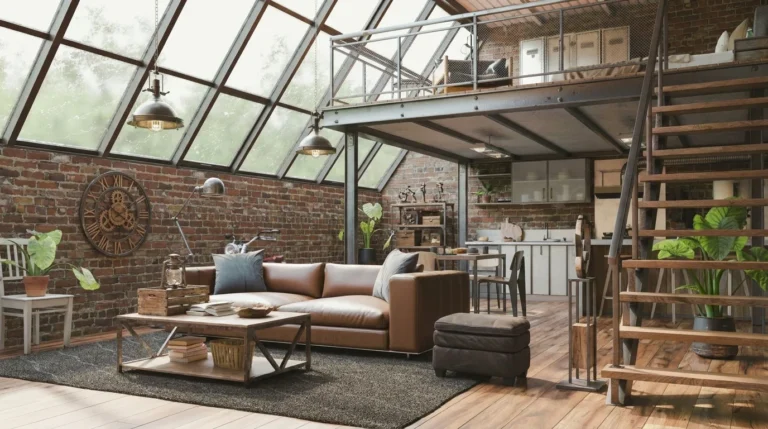
In modern architecture and interior design for commercial spaces, open-plan layouts, minimal lines, glass, exposed concrete, and hard flooring are dominant. While these choices create impressive, bright, and aesthetically perfect spaces, they often hide a serious trap that only becomes apparent when the space fills with people: noise.
Whether it is a modern open-plan office or a busy restaurant, poor acoustics is the “invisible” enemy of productivity and comfort. As a construction company, we know well that a building needs to be more than just visually beautiful and structurally safe. It must be sustainable. And acoustic comfort is a cornerstone of this sustainability.
The Cost of Noise: More Than Just an Annoyance
Poor acoustics do not just cause irritation. They have a measurable impact on a business’s performance.
- In Open-Plan Offices: Studies show that in spaces with high noise levels (conversations, ringing phones, equipment), employee productivity can drop dramatically. The brain consumes a massive amount of energy trying to filter out distractions, leading to mental fatigue (burnout), an increase in errors, a lack of privacy, and elevated stress.
- In the Hospitality Industry (HoReCa): Have you ever been to a restaurant where you have to shout to be heard by the person next to you? This is called the “Lombard Effect” – as background noise increases, people speak louder, creating a vicious cycle of noise pollution. The result? Dissatisfied customers, bad reviews, and a decrease in the time spent at the venue.
Soundproofing vs. Acoustic Improvement: What is the Difference?
To solve the problem, we must understand two concepts that are often confused but work completely differently:
- Soundproofing (Isolation): Aims to prevent sound from passing from one space to another. It involves the structural elements of the building (walls, floors, ceilings, doors/windows). The goal is to keep street noise out or to ensure the meeting room cannot be heard in the rest of the office.
- Acoustic Design & Improvement (Absorption/Diffusion): Deals with controlling sound within the space itself. It addresses problems like echo and prolonged reverberation time (the “buzz” that lingers in the air). Here, we use materials that absorb sound waves instead of reflecting them.
The Right Approach for Commercial Spaces
A proper construction approach does not leave acoustics to chance. Depending on the use of the space, targeted strategies are applied:
1. Solutions for Modern Offices
In open-plan offices, the goal is to create “acoustic zones” and reduce the spread of speech.
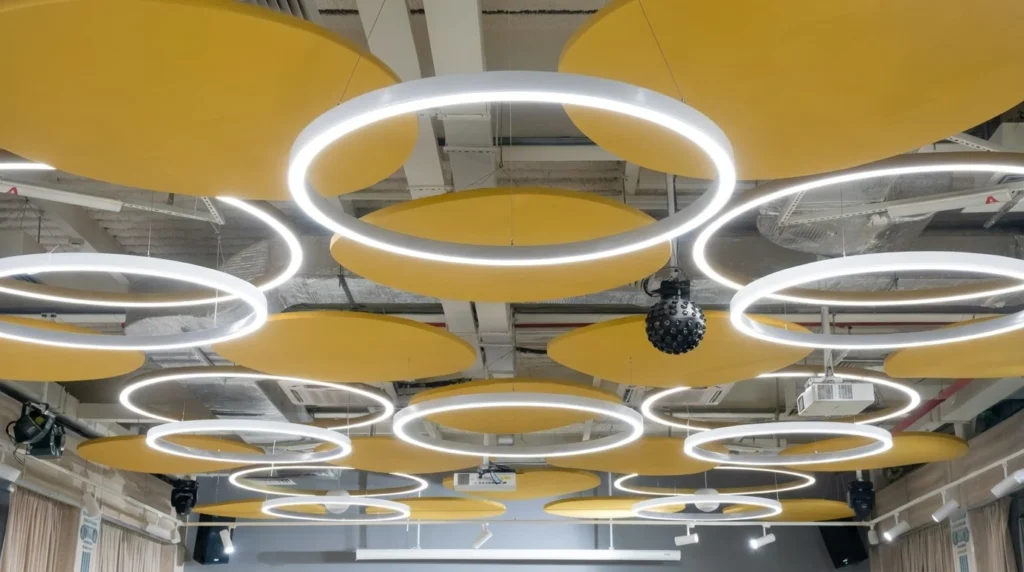
- Acoustic Ceilings & Baffles: The ceiling is the largest continuous surface. Special acoustic plasterboards or suspended panels (baffles) can absorb a huge percentage of sound.
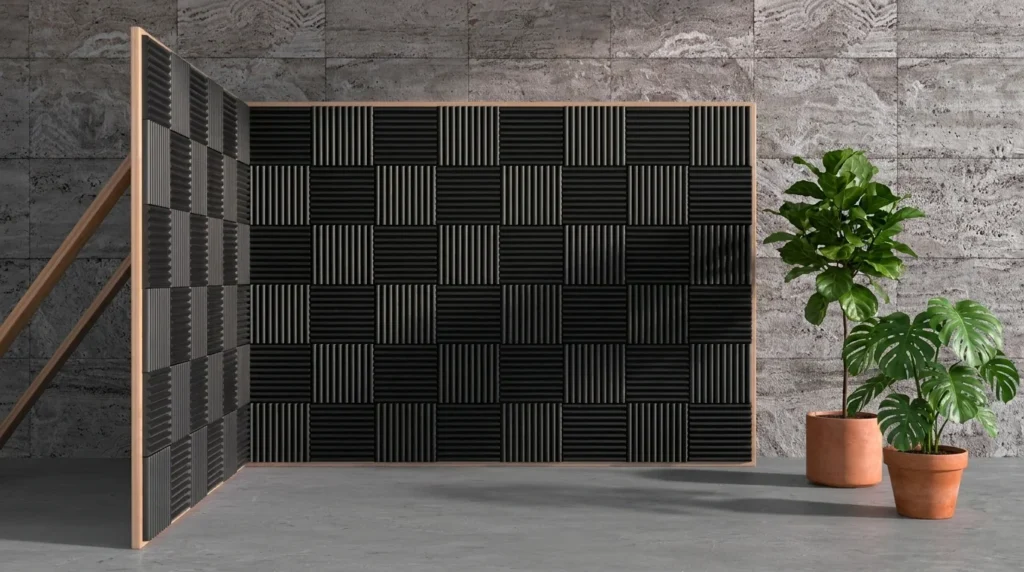
- Wall and Floor Coverings: Using commercial-grade carpets and sound-absorbing wall panels (often made from recycled PET materials or fabric) reduces reverberation.
- Desk Partitions: Using special partitions with a sound-absorbing core between desks prevents the direct transmission of voices.
2. Solutions for Hospitality Spaces
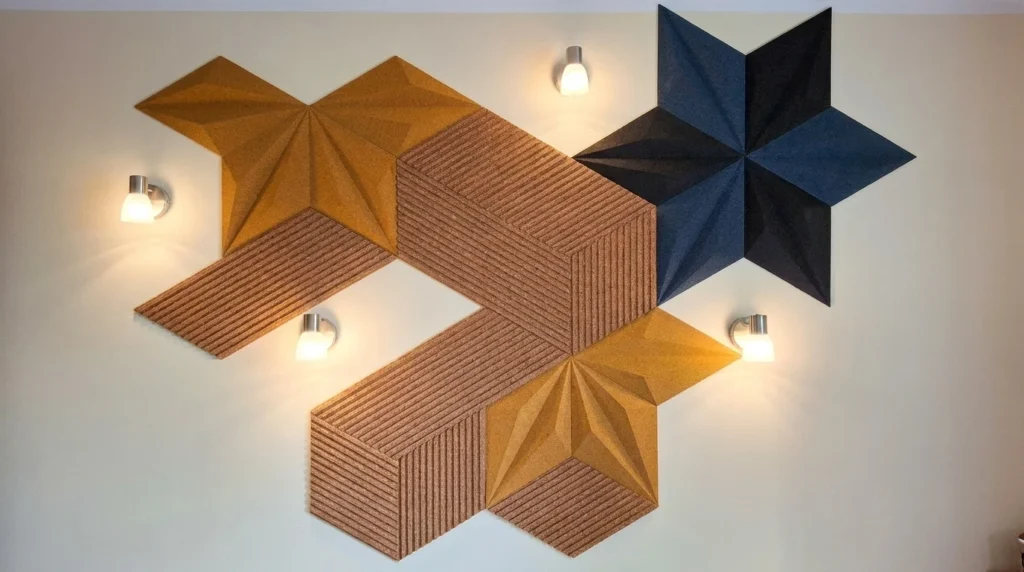
In restaurants and cafes, the challenge is to integrate acoustic improvement without altering the design and aesthetics.
- Invisible Acoustics: There are now acoustic plasters and special perforated surfaces that look like a normal, smooth ceiling but absorb sound exceptionally well.
- Furniture and Fabrics: The strategic use of upholstered furniture (sofas, armchairs), heavy curtains, and fabric linings breaks up the hard surfaces that create echo.
- Acoustic Art Panels: Panels that act as sound absorbers but are printed with artwork, photographs, or the venue’s logo, integrating the solution directly into the decor.
Why the Study Must Be Done at the Design Stage
The biggest mistake we observe in the industry is treating acoustics as an afterthought. Once a space is built, the options are limited, and the cost of intervention increases dramatically.
Conversely, when acoustic design is integrated into the initial architectural planning, the construction team can predict the correct orientation of spaces, select the appropriate building materials from the start, and incorporate sound-absorbing solutions organically. Mechanical equipment (HVAC) is also designed to operate quietly, and partitions are built with the correct insulation specifications.
An Investment in Well-being and Performance
Acoustic comfort is not a luxury, but a fundamental prerequisite for the functionality of a commercial space. For a business, investing in proper soundproofing and acoustic design translates directly into higher productivity, fewer sick leaves due to stress, and, of course, happy customers who enjoy their experience and want to return.
At our company, we treat the building as a living organism. Through specialized design and modern construction materials, we ensure that your commercial space will not just look flawless, but will “sound” perfect too.
Are you designing your new commercial space? Contact our team of engineers to integrate acoustic comfort into the core of your project.