
Buyer’s Guide: How to Properly Read an Apartment Floor Plan Before Buying
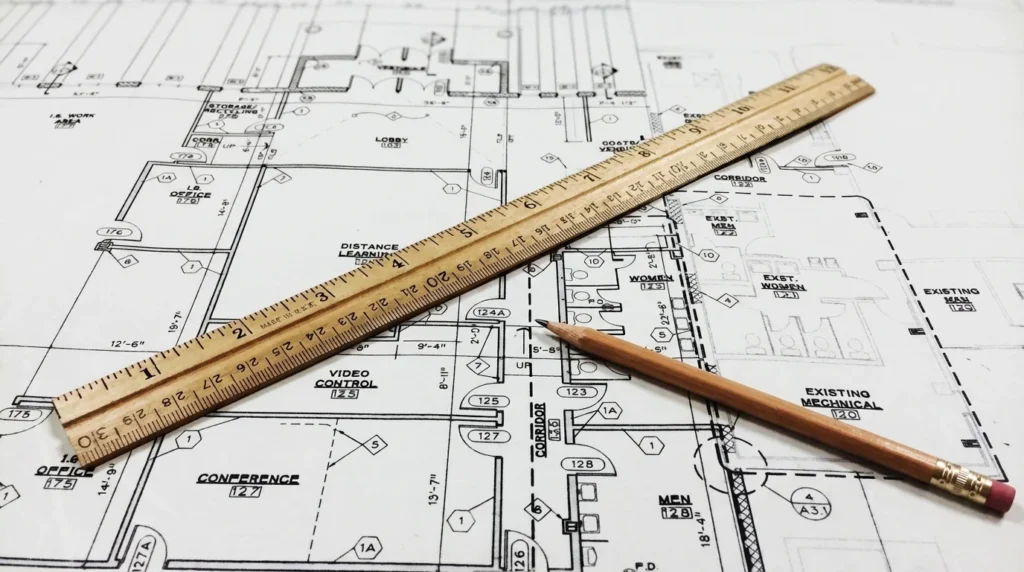
Buying an apartment, especially when it is in the construction phase (off-plan), is one of the most important decisions and investments someone can make. One of the most crucial tools at your disposal to visualize your future home is the architectural plan, and specifically the floor plan.
For many buyers, a plan full of lines, numbers, and symbols might look like an incomprehensible maze. However, reading it correctly is essential to understand the true functionality and layout of the space. In this guide, we break down step-by-step how to “decode” the plans of an apartment, so you can be absolutely sure of your choice.
1. The Basic Elements of a Floor Plan
Before focusing on the rooms, it is important to understand the basic elements that accompany the plan:
- The Scale: Every plan is drawn to scale (e.g., 1:50 or 1:100). This means that 1 centimeter on paper corresponds to 50 or 100 centimeters (1 meter) in reality. Understanding the scale is the first step to perceiving the actual sizes.
- The Orientation (North): Usually, in a corner of the plan, there is an arrow pointing North. This is crucial for understanding how the sun will move throughout the day. Where will it be bright in the morning? Which rooms will be warmer in the afternoon? Bedrooms, for instance, often benefit from an eastern orientation, while living spaces from a southern or southwestern one.
- The Legend: Look for the legend or the symbol table. This is where the special lines and symbols used by the architect are explained (e.g., electrical outlets, switches, sanitary ware).
2. Lines and Walls: What Their Thickness Means
The most prominent element in a floor plan are the lines representing the walls. But not all lines are the same:
- Thick, dark (or hatched) lines: These indicate the load-bearing elements of the building, namely the columns, beams (in some sections), and reinforced concrete walls. These are the structural elements that support the building and cannot be demolished or modified in case of a future renovation.
- Thinner lines: These represent the interior masonry (usually made of bricks or drywall). These are the walls that divide the rooms and, most of the time, can be removed or moved if you want to change the layout (e.g., to combine the kitchen with the living room).
3. Doors, Windows, and Natural Light
The way openings are drawn is very specific:
- Doors: They usually appear as an opening in the wall with a thin curved line (a quarter circle) showing the path (the swing) of the door. Important tip: Notice which way the door opens! Does it block access to a closet? Does it hit a piece of furniture?
- Windows and Balcony Doors: These are depicted as breaks in the wall, usually with two or three thin parallel lines inside the thickness of the wall. The size of this opening on the plan gives you a clear picture of how much natural light will enter the space. Compare the size of the windows in relation to the total size of the room.
4. Understanding Dimensions: Gross vs. Net Area
Reading the numbers next to the spaces requires attention:
- Net Area: This is the actual square meterage you will walk on and use. It is the space from the inner wall to the opposite inner wall.
- Gross Area: This includes the thickness of the exterior walls, the apartment’s share of the common areas (staircase, elevator), and the semi-outdoor spaces.
When you see the dimensions of a bedroom (e.g., 3.20 x 3.50), visualize your furniture. A standard double bed is about 1.60 x 2.00 meters. You can mentally (or by drawing them on paper to scale) place the bed, the nightstands, and the wardrobe to see if the space is sufficient for comfortable movement.
5. The Flow of the Space and Functionality
Once you understand the basics, mentally “walk” through the apartment looking at the floor plan. Start from the main entrance:
- Where does the door lead? Do you walk straight into the living room, or is there a reception area (foyer)?
- How do the day spaces (living room, dining room, kitchen) connect with the night spaces (bedrooms, bathroom)? It is ideal to have a logical transition and relative isolation of the private spaces.
- Evaluate the storage spaces. Are there built-in wardrobes? Where will the washing machine go?
- Look at the bathrooms. Sanitary ware is often drawn on the floor plan. Check if there is enough space between the sink, the toilet, and the shower/bathtub area.
6. Outdoor Spaces: Balconies and Semi-Outdoor Spaces
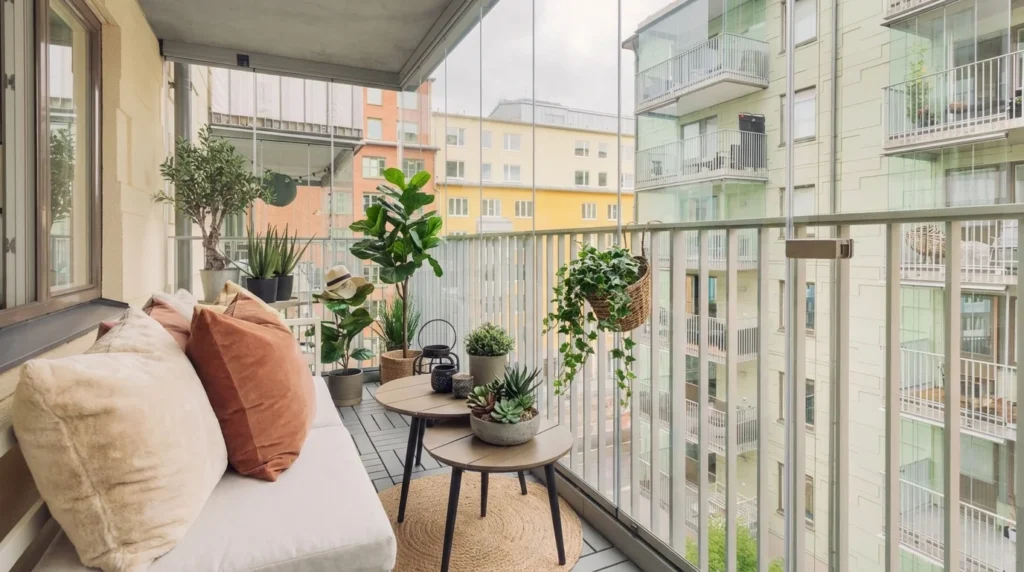
In Greece, outdoor spaces are essentially an extension of the living room. Look at the width of the balconies. A balcony with a depth of less than 1.50 meters might barely fit a small table, while a width of 2.00 meters or more offers comfortable space for an outdoor dining area.
In Summary
Properly reading architectural plans protects you from unpleasant surprises and ensures that the home you are buying perfectly meets your needs. Never hesitate to ask the engineer or the representative of the construction company to explain any line you do not understand.
At our construction company, our goal is absolute transparency. Our team of architects and civil engineers is always at your disposal to study the plans together, answer your questions, and ensure that your future apartment will be exactly as you have dreamed of it.